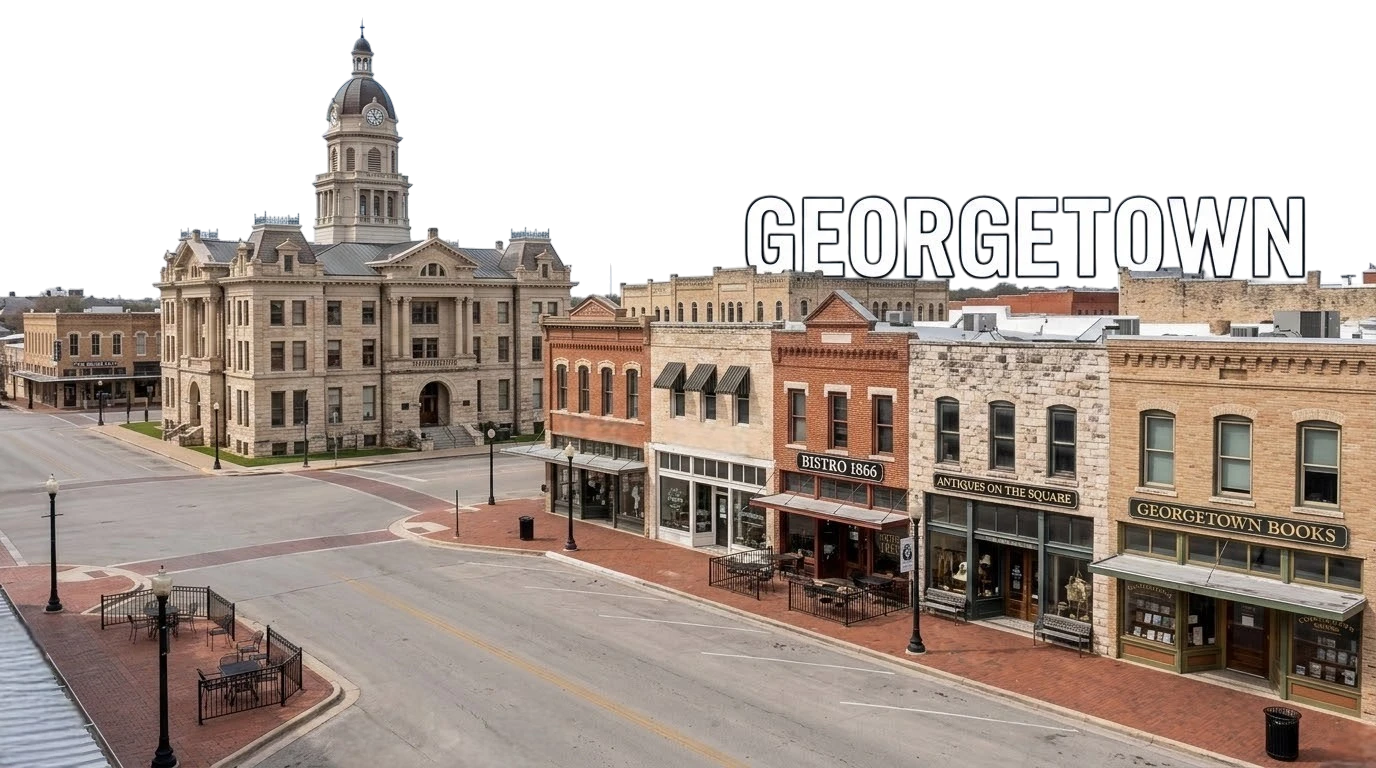
If you spend enough time looking at migration and population data, one thing becomes clear about Dallas-Fort Worth: the metro keeps growing, but the biggest growth story is not happening in downtown Dallas.
From mid-2024 to mid-2025, Dallas-Fort Worth added 123,557 residents, making it the No. 2 metro area in the country for numeric population growth. Dallas County, meanwhile, saw a slight population decline over the same period. That gap says a lot about where North Texas growth is really happening in 2026: farther up the Dallas North Tollway, deeper into Collin County, and east toward Rockwall and Kaufman County.
Why DFW’s Outer Suburbs Keep Pulling Buyers
Three major forces are driving the shift.
- Job growth and corporate expansion: Dallas-Fort Worth has continued to attract major employers and corporate relocations, while companies like Toyota, JPMorgan Chase, the PGA of America, and Caterpillar have helped make places like Plano, Frisco, and Irving strong employment anchors for professionals who want more space without leaving the region.
- Housing supply: Collin County has added nearly 18,000 housing units in a single year, one of the highest totals in the country. The land is still there, builders are active, and master-planned communities are absorbing demand that older, more built-out suburbs simply cannot handle.
- School access: Almost every fast-growing suburb on this list has the same basic pull: newer communities, family-friendly amenities, and school districts that many buyers are willing to drive farther for.
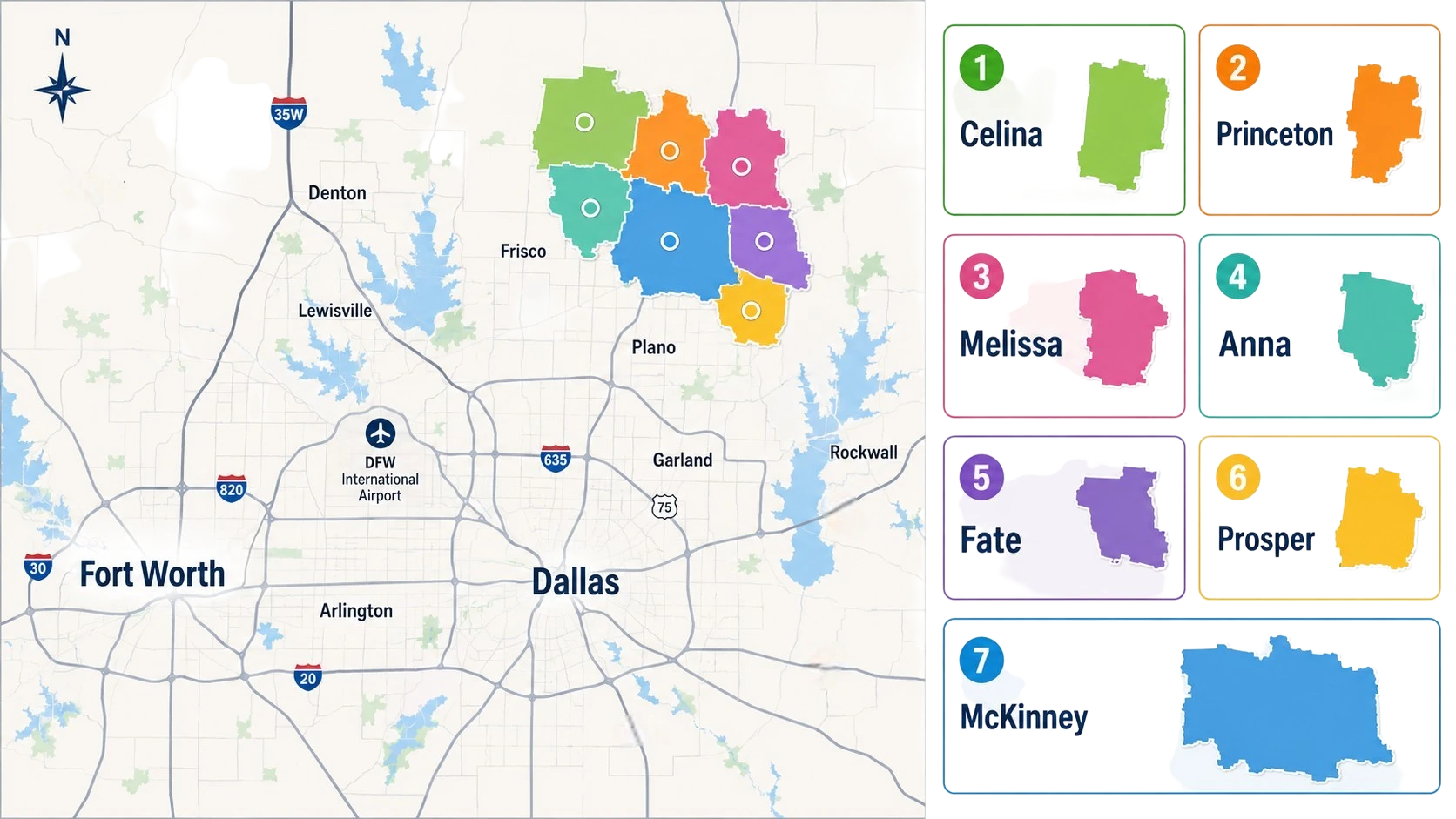
1. Celina
Celina is now the headline name in North Texas growth. In the latest Census release, Celina ranked as the fastest-growing U.S. city with at least 20,000 residents, adding about 12,700 people in one year and reaching roughly 64,000 residents.
The appeal is easy to understand. Celina still has land, newer master-planned communities, a small-town brand, and a fast-growing retail base. Walmart has opened its first Celina Supercenter, Costco is expected to follow, Lowe’s is planned, and Methodist Celina Medical Center is already open after a $237 million investment.
Celina is no longer just “the next Frisco.” It is becoming its own market.
2. Princeton
Princeton was the fastest-growing city in the country in the prior Census release, growing 30.6% from 2023 to 2024. It has since remained one of the strongest growth stories in the U.S., ranking near the top again in the latest data.
Affordability is the main driver. Compared with many Collin County neighbors, Princeton still offers a more approachable entry point for buyers who want new construction but are priced out of Frisco, Prosper, or parts of McKinney.
The city’s growth has also come with pressure. Princeton placed a temporary pause on new residential development so infrastructure, roads, utilities, and public safety could catch up.
3. Melissa
Melissa is one of the clearest examples of North Texas spillover growth. It sits just north of McKinney, gives buyers access to newer homes and strong schools, and still feels less built-out than the bigger Collin County names.
The latest Census data placed Melissa among the top five fastest-growing U.S. cities with populations over 20,000. That is a major signal. Buyers who missed earlier pricing windows in McKinney and Prosper are now looking farther north, and Melissa is absorbing a lot of that demand.
4. Anna
Anna has moved from “emerging” to very much on the map. Like Melissa and Princeton, it benefits from Collin County demand, new construction, and buyers stretching farther north for more space.
Anna also ranked among the top five fastest-growing U.S. cities in the latest Census release. The value proposition is simple: buyers can still find newer homes and larger floor plans without paying Celina or Prosper prices.
5. Fate
Fate is easy to overlook because it sits east of Dallas instead of along the Collin County growth corridor. But that is exactly why it matters.
The city has become one of the stronger growth stories in Rockwall County, helped by Lake Ray Hubbard access, proximity to Rockwall and Royse City, and a steady pipeline of new communities. For buyers who want a suburban lifestyle east of Dallas, Fate offers a more affordable alternative to some of the northern suburbs.
It is not getting the same buzz as Celina or Princeton, but the buyer demand is real.
6. Prosper
Prosper is not the affordability play. It is the upscale family-suburb play.
Master-planned communities like Windsong Ranch, Star Trail, and Light Farms have helped Prosper attract professionals who want a luxury-tier suburb without moving into Southlake pricing. The draw is lifestyle: newer homes, larger lots in certain communities, strong school demand, and a polished suburban feel that appeals to buyers relocating from higher-cost markets.
7. McKinney
McKinney is the most established city on this list, which is exactly why it belongs here.
It has a historic downtown, mature neighborhoods, Stonebridge Ranch, major retail, and access to both newer and older housing stock. It also ranked No. 6 on U-Haul’s 2025 list of top growth cities, showing that mover demand is still strong even though McKinney is no longer a tiny boomtown.
For buyers who want suburban comfort without feeling like they live in a construction zone, McKinney remains one of the default choices in North Texas.
Honorable Mentions Worth Watching
A few nearby cities are worth tracking because they could easily become bigger relocation stories over the next year.
- Forney continues to grow quickly and remains one of the main affordability plays east of Dallas.
- Royse City is following a similar path, with pricing that still looks approachable compared with many Collin County suburbs.
- Little Elm keeps absorbing spillover from Frisco and The Colony.
- Northlake is another Denton County name to watch, especially as buyers continue looking for newer communities north and northwest of Fort Worth.
What New Residents Are Figuring Out

Talk to people who have moved into these suburbs recently, and three themes come up fast.
Build timelines can stretch. The “ready in six months” promise is not something buyers should assume anymore. Depending on the builder, community, and permitting situation, new construction can take longer than expected. Buyers planning a move to Celina, Princeton, Prosper, or Melissa should build in extra room for delays.
The commute math is not always what Google Maps promises. A drive that looks easy at 6:30 a.m. can feel completely different at 7:45. The Dallas North Tollway, U.S. 380, U.S. 75, and I-30 are carrying more growth than they were originally built to handle. Residents with hybrid schedules tend to have an easier time adjusting.
A lot of the movement is local or regional, not just out-of-state. The popular story is that everyone is moving here from California. Some are, sure. But plenty of buyers are moving from Frisco to Celina, Plano to McKinney, Allen to Anna, or Mesquite and Garland toward Fate and Forney. They are not always chasing a brand-new life. Often, they are chasing a larger home, newer construction, better affordability, or more space.
That kind of move can look simple on a map, but it is still a serious lift. Packing up an established household and moving into a bigger floor plan takes planning. Working with a local moving company DFW who already understand DFW traffic patterns, master-planned community rules, HOA restrictions, gate codes, and elevator reservation systems can save a lot of stress on moving day.
What This Means for the Next 12 Months
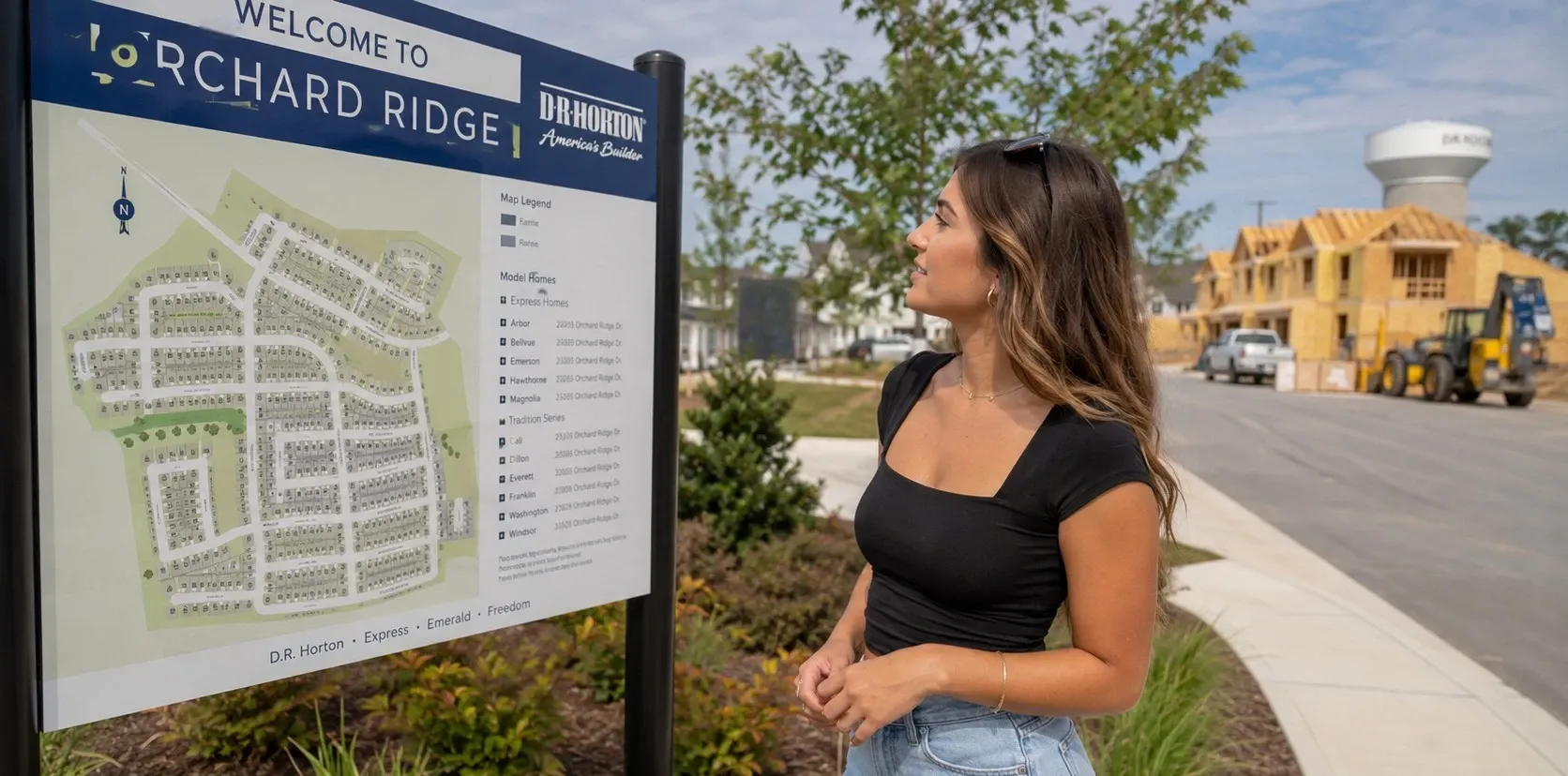
Collin County is already one of the fastest-growing counties in the country, and state projections suggest it could top 1.4 million residents by 2030 and reach about 2.2 million by 2050 under a middle-range migration scenario.
That growth has to land somewhere. Plano, Allen, and much of Frisco are already mature. That means the next wave keeps pushing into Celina, Princeton, Melissa, Anna, Prosper, and nearby cities with land left to build.
For buyers, the window for getting into these markets at earlier-stage pricing is getting tighter. Celina and Prosper are already moving into higher price tiers. Princeton, Forney, Royse City, and parts of Anna still offer more approachable entry points, but the gap is narrowing as infrastructure, retail, and schools catch up with demand.
The story North Texas tells itself is that everyone is moving here from out of state. The real story is more layered. Some newcomers are arriving from California, New York, Illinois, and other high-cost markets. But a huge part of the growth is coming from people already in DFW moving one ring farther out.
They want more house, newer construction, strong schools, and a little more breathing room.
In other words, the boom is not over. It just moved farther north — and a little farther east.