
- Start with Your Home’s Hardest Worker: The HVAC System
- Schedule a Professional Tune-Up Before the Rush
- Master Your Air Filters for Better Air and Lower Costs
- Clear the Way for Cool Air: Vents and Registers
- Plug the Leaks Draining Your Wallet
- Outsmart the Heat with Technology and Timing
- Ensure Your Efforts Aren’t Wasted on a Bad Electricity Plan
- Take Control of Your Summer Comfort and Costs
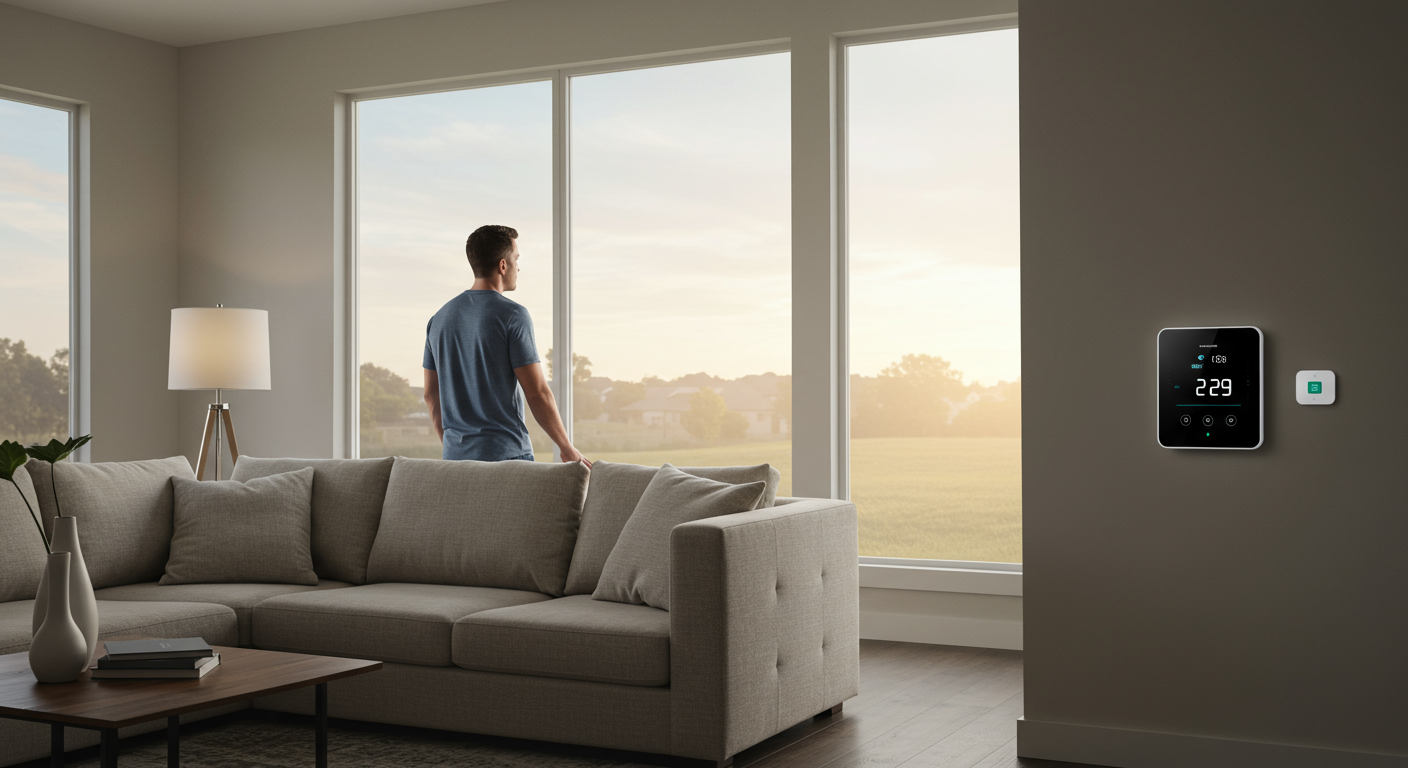
Every Dallas homeowner knows the dread of opening their first full summer electricity bill. After weeks of relentless heat advisories pushing temperatures past 100 degrees, the sticker shock can feel as intense as the Texas sun. It’s a harsh reminder that keeping your home cool comes at a steep price. But what if you could sidestep that financial anxiety this year? This guide provides smart, simple actions you can take right now—not expensive renovations—to transform your home into an energy-efficient sanctuary. You’ll stay cool and keep your bank account healthy for summer 2025 and beyond.
Start with Your Home’s Hardest Worker: The HVAC System
Your air conditioning system is the most valuable player during a Dallas summer, running almost nonstop to battle the oppressive heat. Giving it the attention it deserves before the season kicks into high gear is the single most important step you can take. Neglecting your HVAC is like heading into a marathon without training—it’s bound to break down when you need it most. By optimizing this core system, you set the foundation for a comfortable and cost-effective summer, ensuring it operates at peak performance without wasting a single kilowatt.
Schedule a Professional Tune-Up Before the Rush
Waiting for your AC to fail on a 105-degree July afternoon is a frustrating and costly mistake. It often leads to emergency repair fees and uncomfortable, sleepless nights. An annual pre-summer check-up from a qualified technician is a non-negotiable part of responsible homeownership in Texas.
During a tune-up, a professional will clean the evaporator and condenser coils, check refrigerant levels, and inspect all electrical components to ensure the system runs at peak efficiency. This preventative maintenance helps avoid costly mid-summer breakdowns and improves your system’s energy consumption. If your AC system is over 10-15 years old, it might be time to discuss an upgrade with your technician; modern high-efficiency models with a strong SEER2 (Seasonal Energy Efficiency Ratio 2) rating can significantly reduce your cooling costs for years to come.
Master Your Air Filters for Better Air and Lower Costs
Among all the tasks on your home maintenance list, this is arguably the easiest and cheapest way to improve your HVAC’s efficiency. A clogged, dirty air filter forces your air conditioner to work much harder to push cool air through your home, directly translating to higher energy bills and reduced airflow.
According to the Department of Energy, cleaning out or replacing a dirty filter can lower your AC’s energy use by 5% to 15%. Make it a non-negotiable habit to inspect your air filters every month during the summer and replace them at least every two months, or more frequently if you have pets or allergy sufferers in the house. This simple action costs just a few dollars but pays off in savings and improved indoor air quality.
Clear the Way for Cool Air: Vents and Registers
Here is a free tip that significantly increases your home’s comfort: take a walk through every room and check your air vents. It’s incredibly common for furniture, area rugs, drapes, or even stacks of books to block or partially obstruct vents and registers accidentally. When airflow is impeded, it disrupts the circulation of cool air, creating hot spots in your home and forcing your HVAC system to run longer to reach the temperature set on your thermostat. Ensuring every vent has clear, unobstructed space around it allows your cooling system to work as designed, distributing air evenly and efficiently for a more comfortable living environment without spending a dime. Think of it as giving your cool air a clear runway for takeoff.
Plug the Leaks Draining Your Wallet
Imagine running your air conditioner with a wide-open window—it sounds absurd. Yet, countless homeowners do something similar on a smaller scale every day. Tiny, unseen gaps and cracks throughout your home’s exterior create a constant pathway for your expensive, chilled air to escape and for hot, humid Dallas air to infiltrate. Sealing these air leaks is one of the best methods to reduce energy bills and improve your home’s overall comfort. This process doesn’t require a contractor or a massive budget; with some detective work and a trip to the hardware store, you can fortify your home’s defenses against the summer heat.
Become a Draft Detective
Those small gaps around windows, doors, and utility penetrations might seem insignificant, but they can collectively be a massive source of energy waste. Experts at ENERGY STAR estimate that air leaks can be responsible for 10-25% of a home’s heating and cooling energy loss. Becoming a draft detective is a simple weekend project that immediately pays for itself. To get started, grab a flashlight and use this quick checklist to find the most common culprits.
Your Quick Leak-Finding Checklist
- Visually inspect the perimeters of all windows and exterior doors. Look for daylight, cracks in the sealant, or gaps between the wall and the frame.
- Check the weatherstripping on doors and windows. If it’s brittle, cracked, compressed, or missing in sections, it no longer creates an effective seal and must be replaced.
- Look for gaps around any points where utilities enter your house. This includes outdoor water faucets, dryer vents, and where electrical or gas lines penetrate the walls.
- Use a DIY-friendly caulk for small cracks and weatherstripping kits for doors and windows from a local hardware store to seal these gaps. Many utility companies even offer rebates for these energy-saving materials, so check with your local provider.
Use Window Coverings as Your First Line of Defense
Your windows are a significant source of unwanted heat in the summer, known as solar heat gain. Sunlight streaming through glass can quickly raise the temperature inside your home, forcing your air conditioner to work overtime. The simplest strategy to combat this is to use your existing window coverings as a thermal barrier. The Department of Energy reports that thoughtfully drawn curtains, blinds, or awnings can reduce heat gain by up to 77%, significantly impacting your cooling needs. During the hottest parts of the day, typically from late morning to late afternoon, keep blinds and curtains closed, especially on south- and west-facing windows that receive the most direct sun. Lighter-colored drapes or blinds are even more effective as they reflect sunlight away from the window.
Outsmart the Heat with Technology and Timing
Being energy-efficient isn’t just about physical upgrades; it’s also about developing smarter habits. By leveraging simple technology and being mindful of when you use energy, you can significantly cut down on waste and cost. Programming your thermostat strategically and shifting your daily routines can profoundly impact your electricity consumption. This approach lets you take active control of your energy use, turning your home into a smarter, more responsive environment that works with you to stay cool and save money.
Program Your Thermostat Like a Pro
Your thermostat is the control center for your home’s energy use, and how you set it determines the fate of your monthly bill. While it’s tempting to crank the AC down to a frigid temperature, most energy experts recommend a thermostat setting of 78 degrees when you’re home to achieve the best balance of comfort and savings. However, the real power comes from adjusting the temperature when you’re away from home or asleep. A smart thermostat, which you can control from your mobile, takes this to the next level. These devices can save homeowners up to 10% on cooling costs annually by automatically learning your schedule and adjusting the temperature for you, ensuring you’re never paying to cool an empty house.
| Feature | Standard Thermostat | Smart Thermostat (e.g., Nest, Ecobee) |
|---|---|---|
| Away Setting | Manual adjustment required. Easy to forget. | Learns your schedule and adjusts automatically. |
| Potential Savings | Depends on user diligence. | Up to 10% on annual cooling costs. |
| Peak Hour Mgt. | Manual control needed. | Can be programmed to pre-cool before peak hours. |
| Cost | Lower upfront cost. | Higher upfront cost, but often pays for itself. |
Reduce Heat from the Inside Out
Your air conditioner isn’t just fighting the heat from outside; it’s also battling the heat generated by your appliances. Your oven, stovetop, and dishwasher’s drying cycle produce significant indoor heat, forcing your AC to work even harder to maintain a cool temperature. Use these appliances strategically during the summer, especially during peak heat hours (typically 3-7 PM). Instead of baking, consider grilling outside or using smaller, more efficient appliances like a microwave or a slow cooker. You can also make a significant impact by shifting your laundry and dishwasher cycles to run overnight, after the heat of the day has subsided. This small change in routine reduces the thermal load on your home. It lightens the burden on your cooling system, contributing to a lower energy bill.
Ensure Your Efforts Aren’t Wasted on a Bad Electricity Plan
After you’ve diligently serviced your HVAC, sealed every leak, and adopted smarter habits, there is one final, crucial step to lock in your savings: reviewing your electricity plan. In a deregulated market like Dallas, your chosen provider and plan can greatly impact your budget, potentially saving hundreds of dollars annually. Selecting the right plan is more than just finding the lowest price per kilowatt-hour; it involves finding a provider whose plan structure aligns with your energy usage patterns and whose company values match your own. This final step ensures that all your hard work in weatherproofing your home translates into maximum savings on your monthly bill.
Finding the right plan can feel overwhelming, but some providers are simplifying the process for Dallas residents. A great example is Rhythm Energy, which focuses on transparency and sustainability. Unlike some providers with complex plans with up to 18 hidden fees, Rhythm offers straightforward pricing with zero hidden charges, making your bill predictable and easy to understand. Their current Dallas electricity rates are highly competitive, with plan rates that often come in below the market average.
Take Control of Your Summer Comfort and Costs
You can dramatically reduce summer energy consumption by systematically tackling your HVAC system, sealing the air leaks that drain your budget, and adopting smarter energy habits. The power to avoid the infamous bill shock of a Dallas summer is truly in your hands. This isn’t about sacrificing comfort but being proactive and efficient. Use this checklist to create a cooler, more comfortable home this summer. Enjoy peace of mind with a lower, more predictable energy bill. Your wallet—and your family—will thank you for it. For more tips on increasing your home’s value and efficiency, check out our guide on home maintenance priorities.
Disclaimer: This guide is for general information only. Consult qualified HVAC technicians and financial professionals for advice on your specific issue.