If Dallas wants to build a walkable urbanscape of connected neighborhoods they can’t look to the future because the answers are in the past.
Listening to developers and politicians, I’m struck by how many see walkability as something new and almost futuristic. I guess that happens when your observed memory only includes the automobile era.
Walking is a Part of Our Past And Future
COVID-19 has sent me on a lot of new walks (here, here). My first traversal of a new route has me surprised by the closeness of seemingly far-off places. Subsequent walks allow me to connect the pieces of what I’m seeing. Inner-core Dallas neighborhoods were all founded before the car was the ubiquitous form of transportation.
The early 1900s saw few Americans with personal cars. Pre-World War II, if a home had a garage, it was almost always single-car. Yes, the man worked but the “little woman” had to run a household with either public transportation or she walked. For those reasons, pre-WWII neighborhoods weren’t built as “walkable” out of fashion or status. They were built to function for the people who lived there.
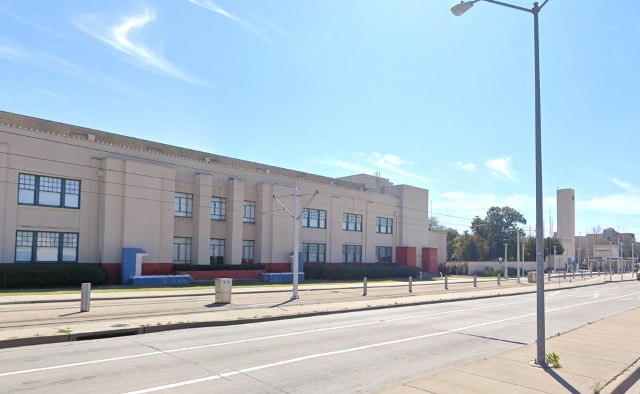
The COVID-19-spurred walks back in time have been fascinating. For example, I can walk to Fair Park in well under an hour. The first time I did, I was amazed as I rounded the corner from Haskell Avenue onto Perry getting my first sideways look at The Women’s Museum (and it’s faded, broken fountains). Entering the Esplanade and walking up to the Hall of State was a revelation that I’d gotten here on foot.
Armed with an understanding the racial and State Fair history, a walk around the park’s perimeter reveals a planned moat of blight. Those few period houses that remain nearby are evidence of what was shorn away from the once-prosperous neighborhood simply because black people now lived there. Standing there with no State Fair pomp to mask it, history is revealed with a clarity often shielded behind a car window.
You see, I’d only ever gotten to Fair Park in a car and typically battling rush hour. It always seemed so far away as the stop/go/stress of driving increased its distance in my head. For those who mechanically traipse the length of the Katy Trail, walking to Fair Park from Turtle Creek is roughly the same distance but far more interesting.
A Stroll Back in Time
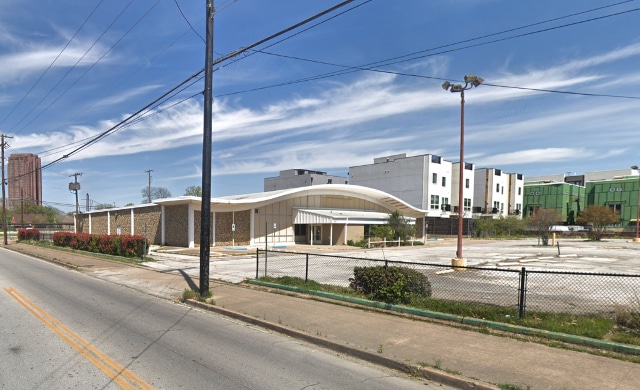
The architecture along the route (there are a few obvious routes) takes you back in time to old churches, 1910s and ’20s homes right up to modern townhouses. You can mentally fold back time and understand the neighborhood by the quality of the church construction. You can recognize the old 1950s pebble-dash Safeway at Ross Avenue and Washington Street clinging to its once signature arched eyebrow roofline.
There is a story to be pieced together on this block.
While Safeway is technically on the corner, the actual corner houses “It’s Your Florist” in what used to be a 1930s gas station. In back of Safeway is Roseland Avenue where you can see one of those older 1950s pre-white-flight churches but directly in back of Safeway you see a few of the original 1930s houses now being erased by modern townhouses.
There are three eras on this block. The original 1930s, a first gentrification in the 1950s, and the ongoing cramming of townhomes and apartments on top of most of it.
How did the 1930s residents circulate in their neighborhood? To understand that is to understand walkability.
A Stroll to The Shopping Strip
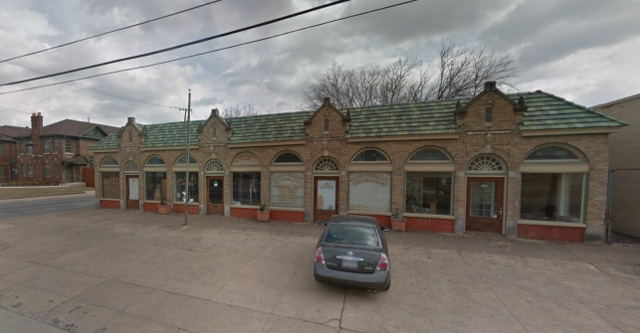
There is a clue at Swiss and Haskell. This small remnant of four shops tells you how, outside a few department stores (the Amazons of their day), people shopped. Originally, the shops might have had a theme – butcher, baker, etc. – but they were all of modest size with pairs of large display windows flanking a central door. The large cement pad in front also tells a story. Just visible to the left are a series of small apartment blocks of the era with unheard-of-today setbacks of generous green lawns. These shops have a similar setback meaning that instead of the huge parking area of today, in the 1930s, it was likely street parking with a wide grass parkway with a sidewalk near the windows.
These types of establishments were walked to. They were ubiquitous in neighborhoods in a rhythm that made walking convenient. Back on Ross Avenue, a busy road in any period, it was likely streetcars that took hop-on, hop-off passengers about their daily errands – yes, daily. Remember, the 1930s were not a time of universal home refrigeration – and those that had them didn’t have the enormous ones we think are normal today.
One route to Fair Park skates Deep Ellum, which retains a lot of its older buildings that tell their own story of what eastern downtown looked like and how it functioned. It’s a history largely erased from today’s urban core. It’s easy to see the streets also match up with those across the Central/US-75/I-345 highway showing it was all once one.
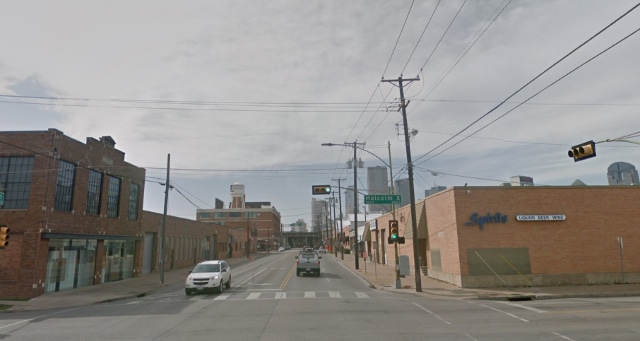
To stand at Malcom X and Canton Street and look towards downtown you can see the Adam Hats Lofts building abutting the highway. It’s shockingly close, with downtown just under the highway. Then realize that the Farmers Market is just on the other side – THAT close.
You will instantly understand that the raised highway has to go underground as I’ve always said.
Creating a Noisy No-Man’s Land
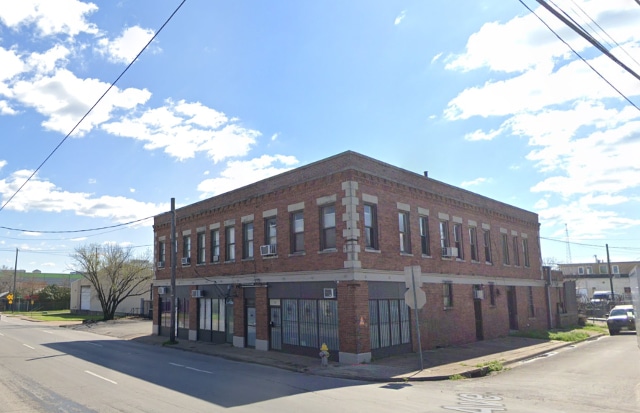
Moving further south from Deep Ellum, there continue to be reminders of the neighborhood and what was. At Haskell and East Side Avenue there’s a form typical of the early 20th century – ground-floor retail with shopkeepers and tenants living above. It’s something that developers all over Dallas — but especially in Oak Cliff — are trying hard to replicate.
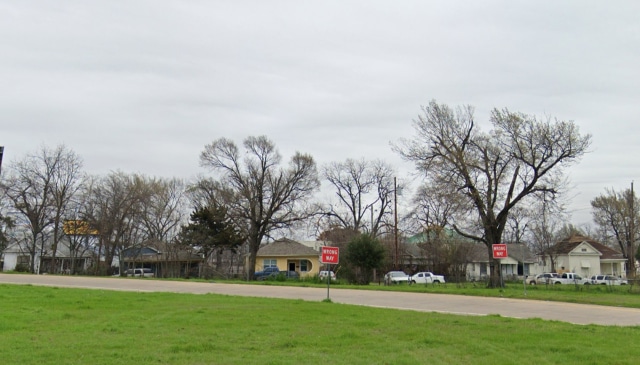
Passing under I-30 you immediately see a block of original houses bordering a space-eating exit ramp. It’s then you realize these home and the ones torn down for the highway housed the customers for those shops on East Side just blocks away. Convenience to goods and services breeds walkability.
Just walking under I-30 you also realize just how smooth an incision it made in separating South Dallas and abandoning Fair Park. What remains is a noisy no-man’s land. Eliminating the highways and stitching it back together in your head, you realize what’s been lost. This understanding can’t be had in a car.
Walking Toward a Better Understanding of Dallas
There are plenty of other connective walks you can take to better understand how Dallas used to be a walkable city back when it was utility instead of fashion. Walk Swiss Avenue 45-minutes from the former home of the now-closed Lizard Lounge to Swiss’ end at La Vista Drive and you will understand the straight-shot convenience of Swiss Avenue to downtown for Dallas’ elite.
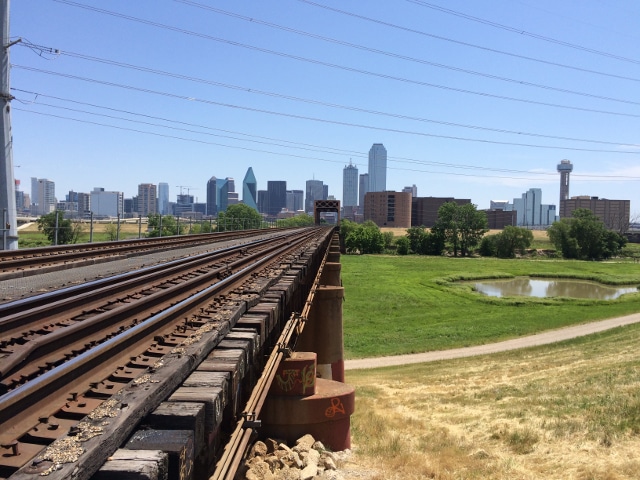
Walk the west upper bank of the Trinity levee from Sylvan Avenue to the Continental bridge. See the changes happening on both sides of the river. See downtown from an angle only glimpsed through the window of a speeding car (we all speed). See plainly why a highway running between the levee banks was always a stupid idea belched forth by greedy idiots.
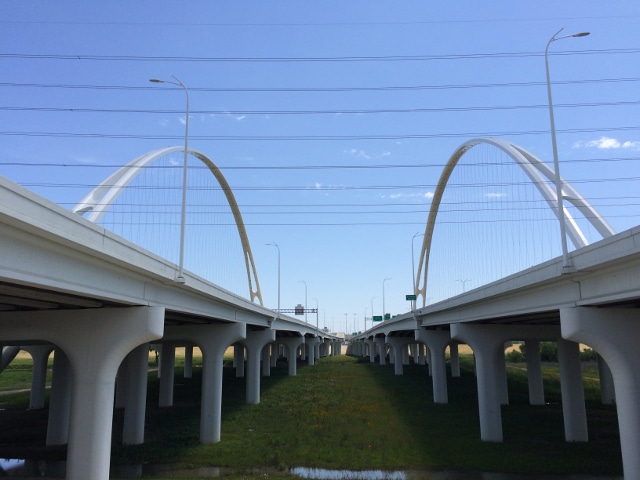
Having walked these many walks (and more) I think they should be mandatory for politicians and plan commissioners. These shapers of Dallas’ future need to get out of the car and understand how things worked. Walkable Dallas isn’t new – the first step to recapturing that dream is to remember how it was done. Walkable Dallas is ultimately a restoration project.
Racial Division, Broken Neighborhoods
Finally, Dallas’ broken neighborhood interconnections and functionalities are built on racism. From redlining to highway construction, we broke our neighborhoods based on the ideology of keeping black people out. The automobile was simply one of the tools we used to do it.
However revolting that past is, it did leave us with the tools we need to understand if we look. You see, when white Dallas abandoned Deep Ellum and South Dallas, it left behind the buildings that white Dallas would have bulldozed as progress. Now we can use them to remember and to help craft a revived, walkable city that helps all Dallas citizens.