
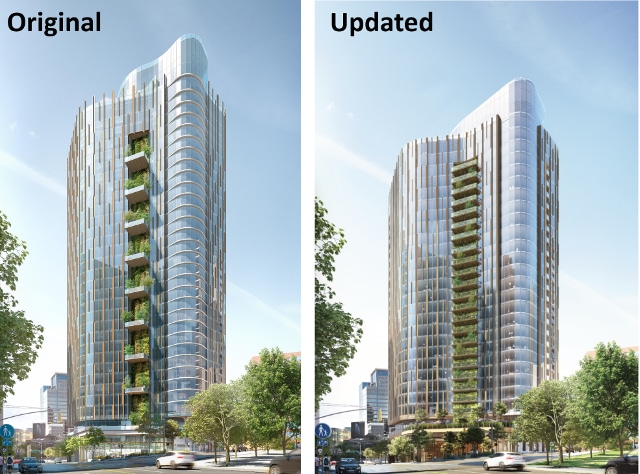
At the far western Uptown end of McKinney Avenue will be 1899 McKinney, a 26-story, 270-unit high-rise that will always be known for its green wall. It has been written about before (here, here). Last week, I was able to speak with Zach Smith, the CEO of Zauben, the company developing the green wall for the project.
North America and (of course) Texas are behind in the use of green roofing and walls. We spoke about Chicago’s millions of square feet of green roofing, projects in London like the Athenaeum Hotel, and Milan’s Bosco Verticale (Tripadvisor’s No. 39 of 1,152 things to do in Milan). Smith said that if New York City’s rooftops were covered in green, the city’s temperature would drop eight to 10 degrees and save untold energy.

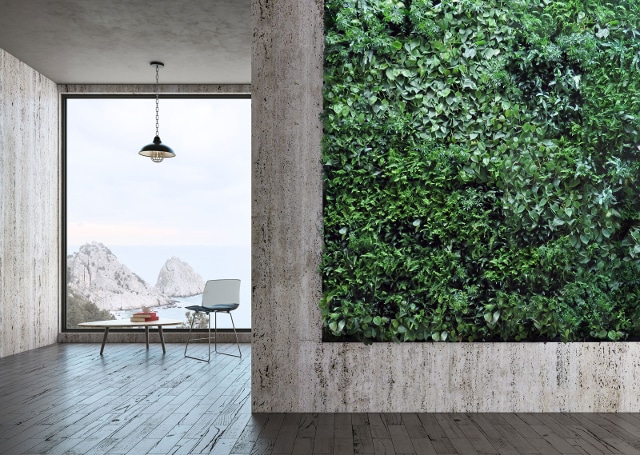
All this makes the Rastegar project so memorable for Dallas. When complete, the green wall will be the tallest in North America with over 40,000 plants racing up the side of the building. We all know that plants take in carbon dioxide and release oxygen. What I didn’t know is that it’s not even. Smith estimates that the wall will inhale a third more carbon dioxide than it exhales oxygen – 1,600 versus 1,200 pounds annually.
No, it’s not going to curb climate change on its own – no single project will. But over the long haul, the building will offset the carbon dioxide released in its construction, eventually becoming a (small) carbon sink – something few buildings can claim.
It’s also goes against the grain of tree loss triggered by development. The BBC reported last week that in Melbourne, Australia, 20 percent of 2,000 lost street trees were within 10 meters (33 feet) of major development sites. We certainly see projects clear-cutting development parcels all over Dallas. The Rastegar site only has a small clump of saplings so young they may have sprung up while the site was vacant.
We discussed how changes in shade will be handled. The building will sit in an area attracting all sorts of high-rise development that will not change in the long-term. The low-rise opposite the project will become a high-rise at some point. How will plants survive?
The easy answer is that you change the type of plants to those that enjoy more shade. The other component might be to install tiny LED grow lights (perhaps solar powered from the roof?).

Another obvious question is who and how are the plants maintained? Another two-part answer. Either the building would lower a swing stage scaffold from the roof (like window washers) who would fertilize, prune and replace plants from the exterior, or the gardening could be done from the inside.
It’s in the building’s best interest to maintain the wall and it will be in unit owners’ best interests, too. After all, you don’t eventually buy into this building planning to kill all the plants on your balcony.
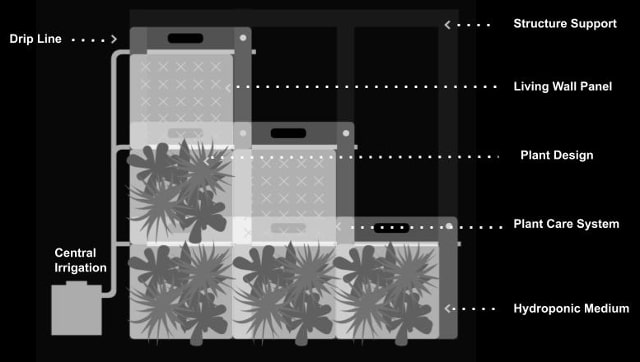
You might also be wondering about watering the plants and whether it will produce a 26-story weeping garden on watering days. Nope. First, the soil isn’t soil. It’s a highly absorbent material that doesn’t shed (like dirt would). Second, being a highly absorbent growth medium, it doesn’t need a lot of water – Smith said it’s needs were measured in cups, not gallons.
This begged the question of water reclamation. Would the building have a rain catchment system that filtered water so that nozzles didn’t clog? I was told that wouldn’t be there right away but that the architect was designing the plumbing stacks in a way that enables those systems to be added.
I harp on this all the time with architects. Running drain lines in a way that enables catchment later is peanuts in the design and construction phase but might be cost prohibitive later. It’s a lesson learned opening walls and cursing “What idiot put that THERE?”
It was educational to spend time discussing the technological nits and gnats of how the green wall will be installed and function. As construction proceeds, I’ll be knocking on their door to see how it all goes in.
No, this one wall won’t reverse climate change. But hopefully its greenery becomes a visual smack in the head to Dallas’ unimaginably dull developers – the ones who didn’t even read this far.