- The 8 Warning Signs to Watch For
- 1. Your Water Bills Keep Climbing
- 2. You Hear Pipes Knocking or Banging
- 3. Slow Drains in More Than One Room
- 4. Discolored or Smelly Water
- 5. Visible Stains on Ceilings, Walls, or Floors
- 6. Toilets That Run, Wobble, or Leak at the Base
- 7. Low Water Pressure Throughout the House
- 8. Your Water Heater Is 10 Years or Older
- Why a Pre-Listing Inspection Pays for Itself
- What a Plumbing Inspection Usually Covers
- How to Prepare for the Inspection
- The Takeaway for Sellers
Selling a home means putting your property under a microscope, and buyers know exactly where to look. Plumbing issues are high on their list because repairs can get expensive fast.
A pre-listing inspection is one of the smartest moves a seller can make in the competitive Arizona real estate market. The U.S. Environmental Protection Agency reports that household leaks waste nearly 1 trillion gallons of water nationwide each year, with about 10 percent of homes losing 90 gallons or more daily.
That kind of waste shows up on bills, leaves stains, and gets flagged during walkthroughs. If your home has hidden issues, buyers and their inspectors will usually find them. It is much smarter to find them yourself first.
Having a professional plumber check things out before you list can help keep a deal from falling apart over a problem you did not know was there.
The 8 Warning Signs to Watch For
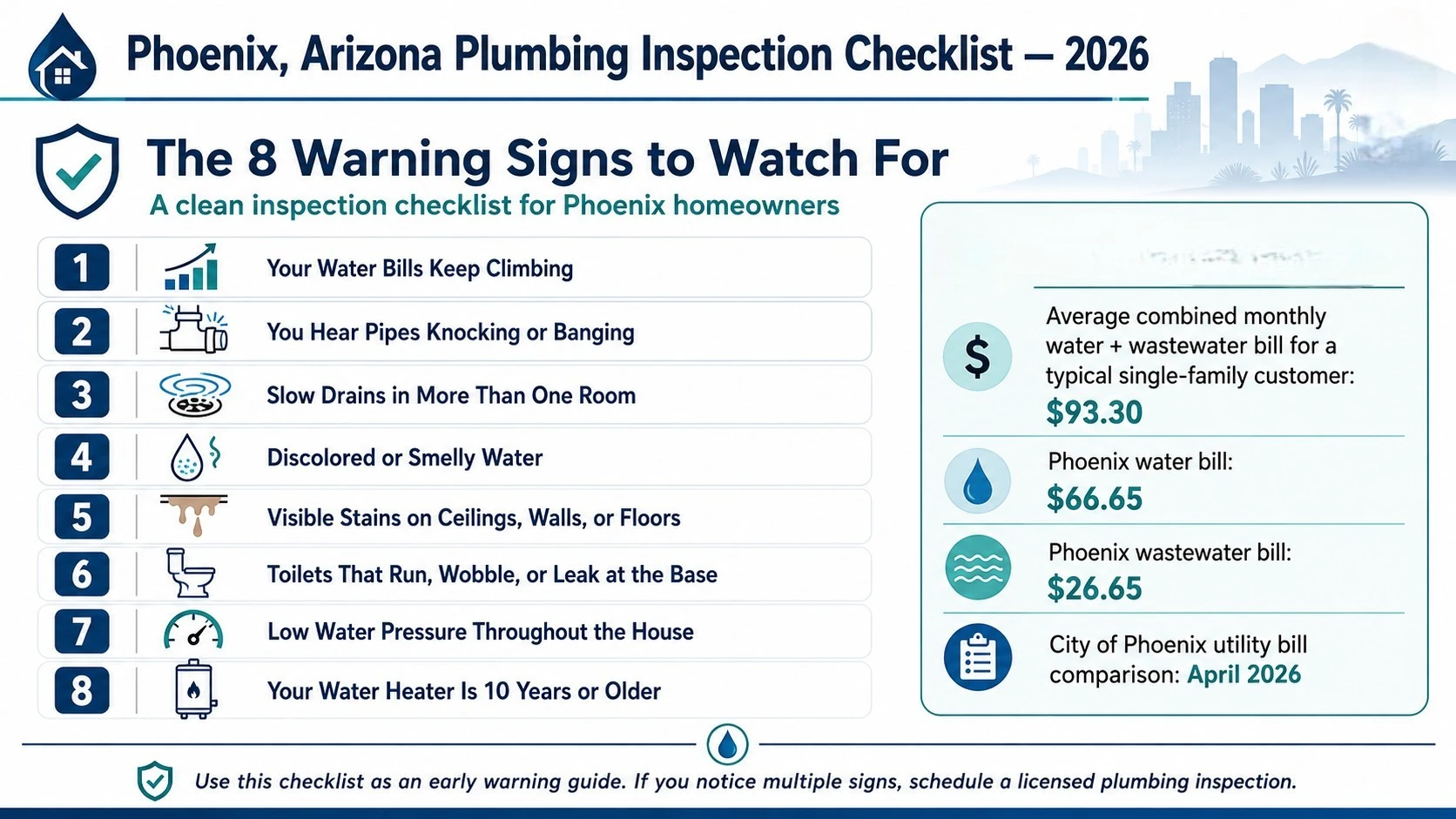
Here are eight signs that your home needs a professional plumbing inspection before that “For Sale” sign goes up.
1. Your Water Bills Keep Climbing
If your water bill has been creeping up over the past year without any change in your habits, something is off. A hidden leak inside your walls or under the floors could be to blame.
Even a slow drip behind a bathroom vanity adds up. Buyers reviewing utility records often spot the trend, so it is best to address it now before showings begin.
2. You Hear Pipes Knocking or Banging
Pipes should stay quiet. When they rattle, knock, or hammer after you turn off a faucet, that usually points to pressure issues or loose fittings. If you ignore it, the noise will only get worse, and the joints can eventually fail.
A plumber can pinpoint whether it is a pressure regulator problem or something more serious deeper in the line.
3. Slow Drains in More Than One Room
A single slow drain might just need a snake. But if your kitchen sink, bathroom tub, and laundry drain all run slowly, the issue likely sits deeper in the main line. In places like Phoenix, thirsty tree roots often break into pipes seeking water, causing major backups. Grease buildup or aging pipes can also cause this.
Inspectors hired by buyers will catch it almost immediately during their walkthrough.
4. Discolored or Smelly Water
Brown or rust-tinted water points to corrosion inside galvanized pipes or a deteriorating water heater, while a sulfur smell can mean bacteria growth or anode rod problems.
Either way, rusty or smelly water will make buyers think twice fast. A pre-listing inspection helps you fix it before anyone turns on a tap.
5. Visible Stains on Ceilings, Walls, or Floors
Water stains on your ceiling or warped baseboards are clear signs of a past or current leak. Even if the leak stopped, the stain still raises questions.
Buyers will assume the worst, often worrying about mold behind the drywall. A plumber and possibly a moisture specialist can confirm whether the issue is active or already resolved.
6. Toilets That Run, Wobble, or Leak at the Base
A toilet that runs constantly wastes water and signals a worn flapper or fill valve. A wobbly toilet usually means a failed wax ring or a rotting subfloor underneath. Both are major red flags during inspections.
The EPA notes that an old flapper alone can silently waste thousands of gallons yearly, and no buyer wants to inherit that problem.
7. Low Water Pressure Throughout the House
Weak pressure in just one fixture is usually a clogged aerator. But when every tap trickles, the cause sits deeper. Arizona is known for its hard water, and mineral buildup inside old pipes is a very common culprit.
A failing pressure regulator or municipal supply problems could also be at fault. Buyers will test showers and faucets, and weak pressure gives them an easy reason to negotiate the price down.
8. Your Water Heater Is 10 Years or Older
Most standard tank water heaters last between 8 and 12 years. If yours is getting close to that range, expect questions during showings.
Rust around the tank base, popping sounds, or lukewarm showers all point to the end of its lifespan. Replacing it before listing, or at least getting it inspected, helps buyers feel more confident and can protect your asking price.
Why a Pre-Listing Inspection Pays for Itself

Some sellers skip the inspection because they assume buyers will hire their own. But waiting puts you on the defensive. When the buyer’s inspector finds problems, you lose leverage, and repairs done under deadline pressure almost always cost more.
Catching issues before prospective buyers set foot in the home keeps you in control of both the timeline and the budget.
Here is what you gain by going first:
- You keep more negotiating power. You decide what to repair, what to disclose, and how to price the home. Buyers cannot use surprise findings to chip away at your asking price.
- You can lower repair costs. When you are not racing the clock, you can compare quotes from two or three plumbers instead of accepting the first available one.
- Your inspection paperwork looks stronger. Listings paired with recent inspection paperwork and repair receipts feel more trustworthy from the very first showing.
- Closing is less stressful. Fewer surprises during the buyer’s inspection means fewer renegotiations, repair credits, and delays before closing.
- Buyers can make stronger offers. When they see documented work, they are more willing to submit serious offers without padding for unknown risks.
- You avoid emergency rush fees. Same-day plumbing calls and rush jobs cost significantly more than scheduled visits.
A few hundred dollars spent on a plumber’s review can lead to thousands more at closing, plus far less back-and-forth during escrow. It is the kind of investment that quietly protects every other dollar in the transaction.
What a Plumbing Inspection Usually Covers
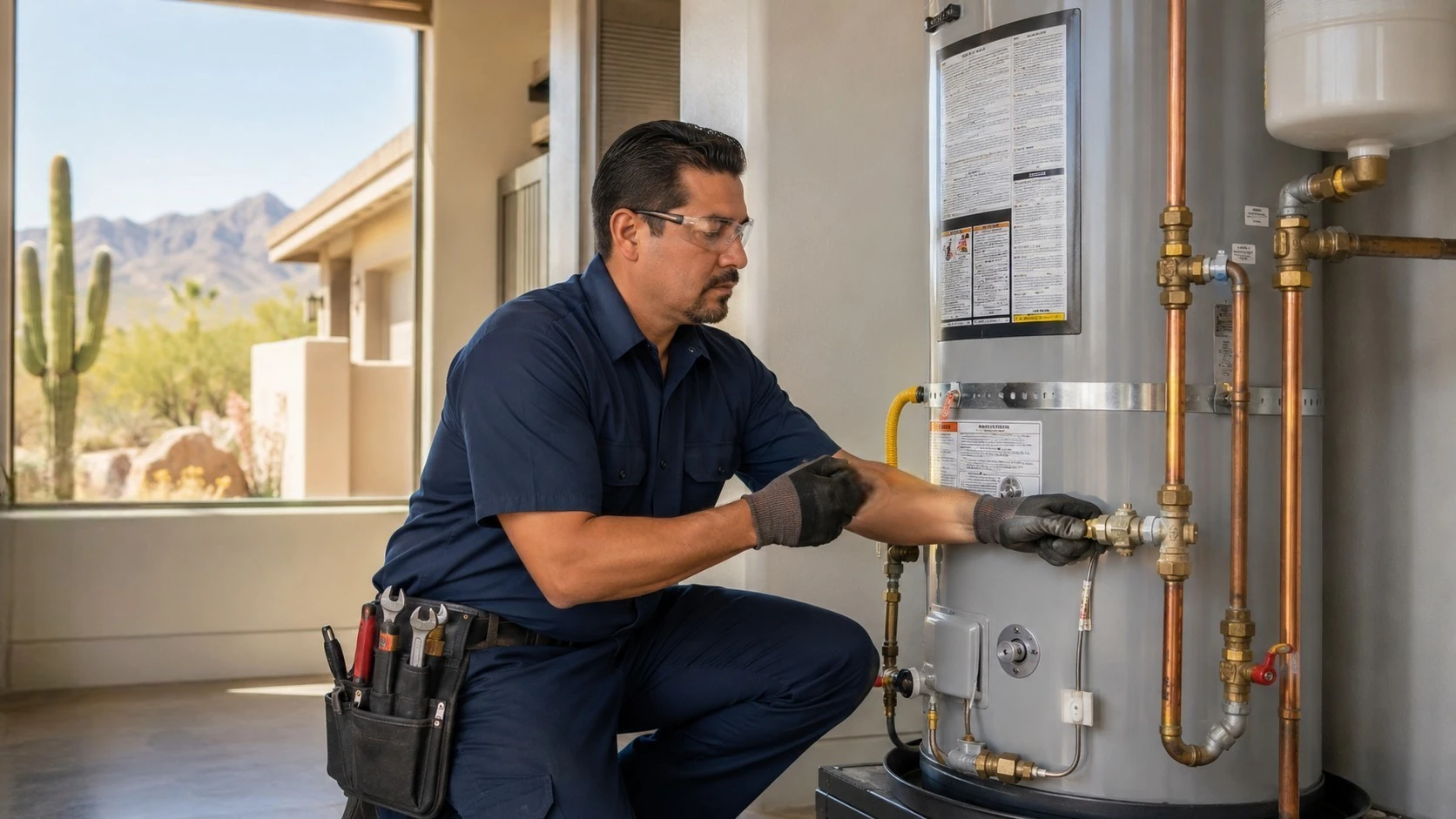
A licensed plumber checks the parts of your home that buyers and their inspectors will scrutinize most closely. The goal is to catch anything that could slow down or derail the sale, from minor drips to major structural concerns hiding behind walls or underground.
Here is what a standard inspection typically includes:
- Supply lines and main shut-off. The plumber checks for corrosion, leaks, and pressure problems along the lines that bring water into your home.
- Drain and waste system. Sinks, tubs, and floor drains are tested for proper flow and venting. Slow drains often hint at deeper clogs in the main line.
- Water heater evaluation. Age, sediment buildup, anode rod condition, temperature settings, and signs of rust around the base all get reviewed. This is especially important for water heaters stored in hot Phoenix garages.
- Fixtures and faucets. Toilets, showerheads, and sinks are tested for leaks, weak pressure, running water, and worn seals.
- Visible piping inspection. The plumber inspects exposed pipes in basements, crawl spaces, and utility rooms for corrosion, sagging, or improper repairs.
- Sewer line camera scope. Many plumbers run a small camera through the main sewer line to catch root intrusion, cracks, bellies, or blockages no visual check would reveal.
- Code compliance review. Older homes often have fittings or materials that no longer meet current plumbing codes, and these can come up during the buyer’s inspection.
- Written report with photos. You will receive a document showing what passed, what failed, and what needs monitoring, often with images attached.
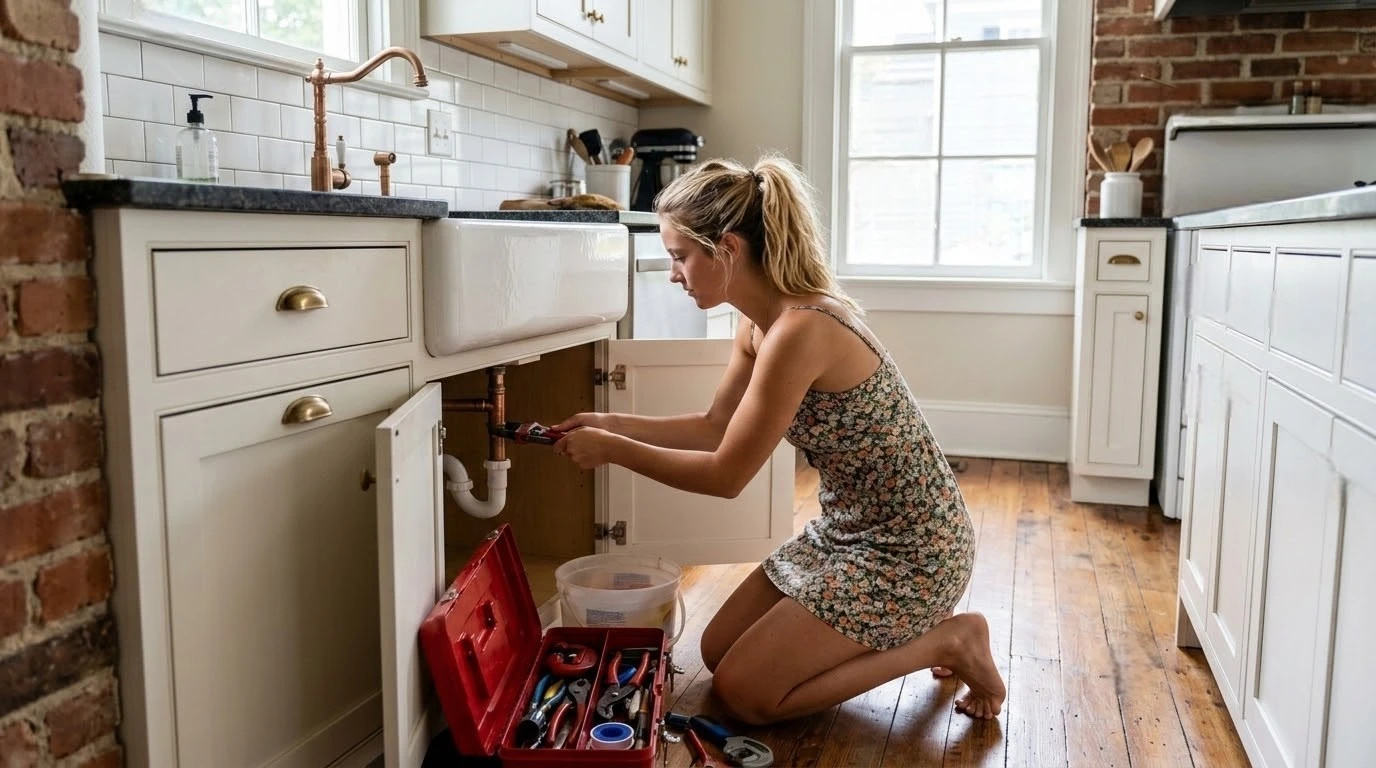
If something turns up, you have options. Small repairs can often be done the same day. Bigger issues, like a sewer line replacement, give you time to plan. You can fix it, disclose it, or adjust your asking price accordingly. The goal is to have full information before you’re forced to react to a buyer’s findings during negotiations.
How to Prepare for the Inspection
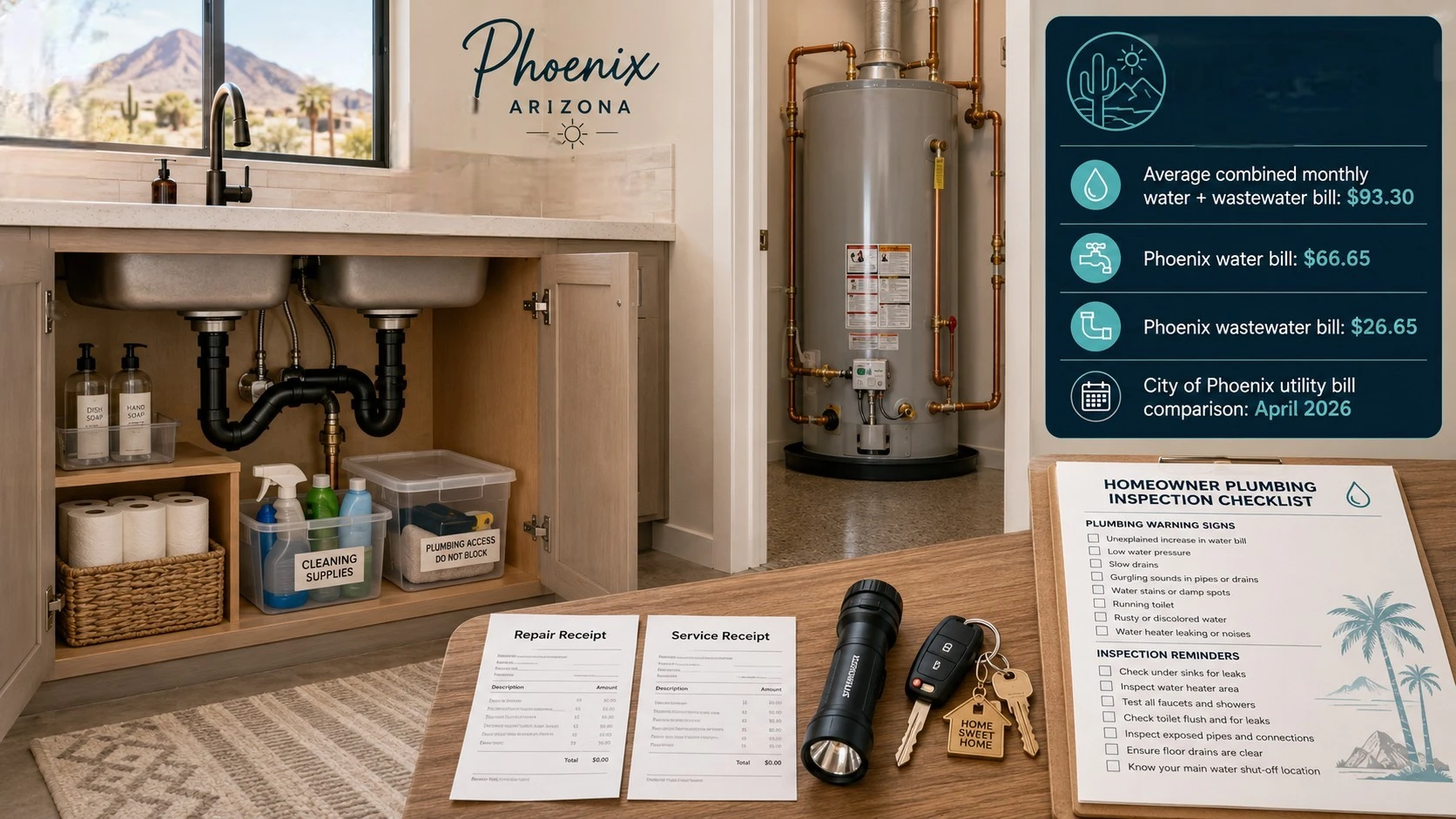
A little prep work helps the plumber move efficiently and gives you a more accurate report. The easier it is for them to access fixtures and equipment, the more thorough the review will be. Spend an hour or two getting your home ready before the appointment.
Before the plumber arrives:
- Clear out the cabinets under every sink so they can see supply lines and drain connections.
- Move boxes, laundry baskets, or storage bins away from the water heater and main shut-off valve.
- Locate the sewer cleanout, which is often outside near the foundation, and make sure it is not buried under mulch or covered by furniture.
- Gather receipts from past plumbing work, water heater installations, or repiping projects. These build a paper trail that buyers appreciate.
- Write down any concerns you have noticed, like slow drains, knocking pipes, or fluctuating hot water.
- Make sure pets are secured and the plumber has clear paths to basements, crawl spaces, and outdoor spigots.
- Walk through the home yourself first:
- Run every faucet for at least 30 seconds and watch for discoloration or weak flow.
- Flush every toilet and listen for hissing or running after the tank refills.
- Check each tub and shower for slow drainage or pooling water.
- Look under sinks with a flashlight for moisture, water stains, or warped wood.
- Test the laundry hookups and check the washing machine hoses for cracks or bulges.
- Note any odd smells near drains, especially sulfur or sewer gas.
A plumber works faster when they know what concerns you, and you get a more useful report when both of you are on the same page from the start. Think of this prep as giving yourself the cleanest possible inspection process. The more they see, the fewer surprises buyers will find later.
The Takeaway for Sellers
Selling a home goes a lot smoother when surprises stay out of the picture. Plumbing problems sit near the top of every buyer’s worry list, right alongside roofs and foundations. By spotting these eight signs early and bringing in a pro for an inspection, you protect your sale price, your timeline, and your peace of mind.
Take a slow walk through your Arizona home this week. Listen for odd sounds, check under sinks, and run every fixture. If something feels off, it probably is. Schedule that inspection before the listing photos go up, and you will thank yourself when buyers start making serious offers with fewer demands.