When your roof fails unexpectedly, every minute counts. Whether it’s from fierce Santa Ana winds, sudden winter downpours, or nearby wildfires, your home can be left exposed within minutes. In these situations, calling in an emergency roofing service is the only way to protect your Southern California property from further damage.
Emergency installations are not like the usual roofing jobs you plan weeks or months ahead of time. Emergency installations are about speed, safety and protecting the home immediately. The goal is simple – to get the home secured as fast as possible and to prevent water intrusion, structural weakening and interior damage.
Understanding how emergency roofing works helps you act fast and make better decisions during a highly stressful situation.
What Counts as a Roofing Emergency?
Not all roof issues are a call for the middle of the night, but some things need to be taken care of immediately. Emergency situations sometimes mean major damage and your home is exposed to the elements.
Common roofing emergencies include:
- A full or partial roof collapse
- Severe wind damage or torn-off shingles
- Impact from a large fallen tree or branch
- Fire, smoke, or falling ember damage
- Sudden, major leaks during heavy rain
- Missing large sections of roofing material
In these cases, throwing a tarp over it is often not enough. A full or partial emergency installation may be needed to restore safety and prevent ongoing damage.
What to Do Immediately After Roof Damage
The first step after discovering roof damage is always safety. Stay out of unstable areas and never attempt to climb onto the roof yourself.
Instead:
- Move valuables away from leak areas
- Place buckets or containers under active leaks
- Stay clear of electrical hazards in wet areas
- Keep family and pets away from the damaged zone
- Contact an emergency roofing contractor right away
Fast action is critical because water intrusion can begin damaging insulation, ceilings, walls, and electrical systems within hours.
How the Emergency Roofing Process Works
Emergency roof installation is designed to stabilize and protect your home quickly. It isn’t always a permanent solution at first, but it ensures the structure is secure until complete repairs can be finished.
The process usually begins with an urgent inspection. Experienced roofing contractors will assess the level of damage, determine if the structure is safe, and decide whether a partial or full installation is required.
Once the assessment is complete, the crew may:
- Remove severely damaged materials
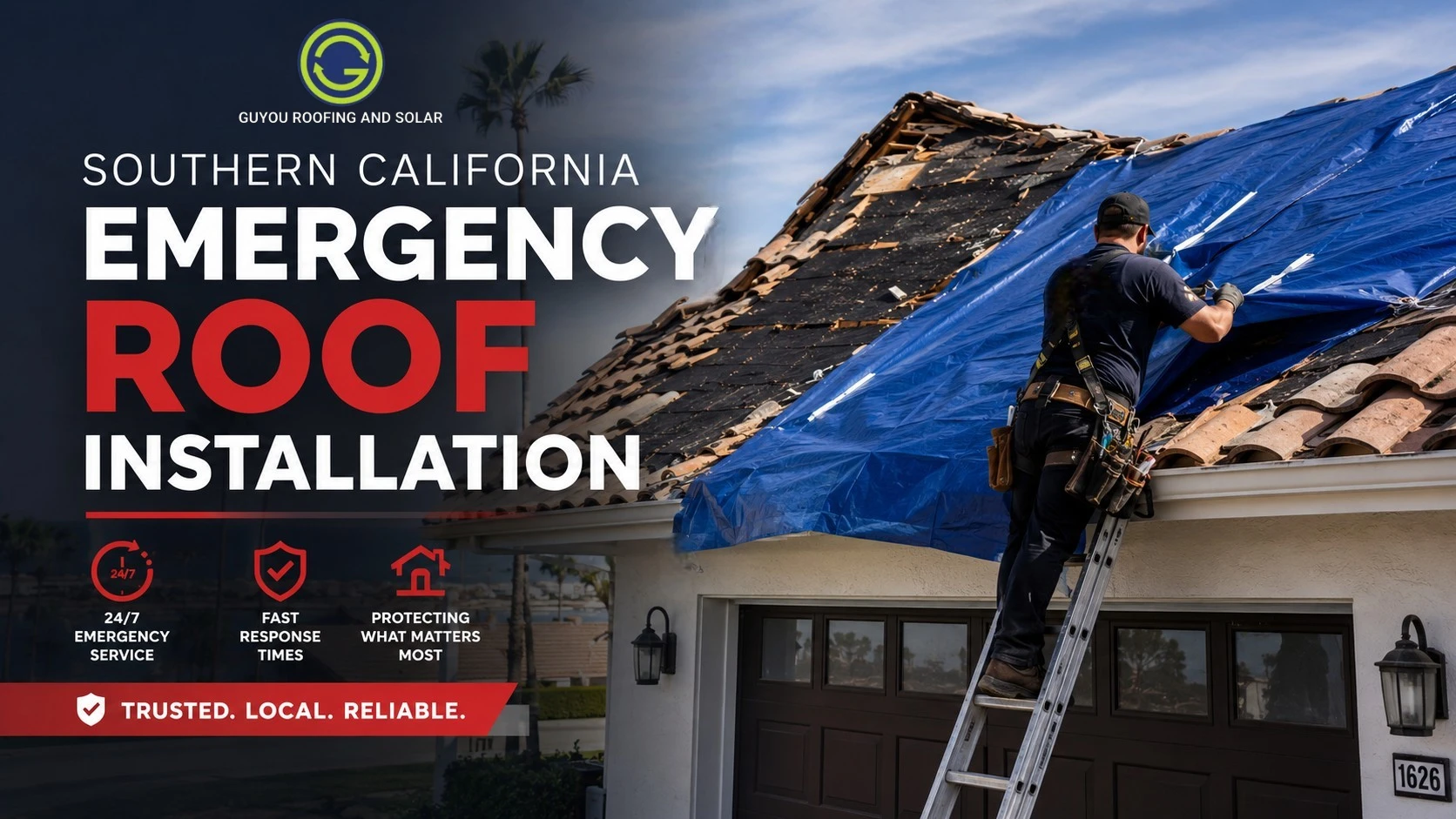
- Install temporary protective coverings
- Reinforce weakened structural supports
- Begin installing new roofing sections immediately
In many cases, emergency work transitions directly into a full replacement once materials and weather conditions allow.
Temporary Fixes vs. Full Replacement
Not all emergencies allow for an immediate full installation. Weather conditions, material availability, and safety concerns can affect how quickly permanent work can begin.
Temporary solutions may include:
- Professionally tarping the roof to prevent leaks
- Sealing exposed areas
- Reinforcing structural supports
However, these are strictly short-term measures. The goal is always to move toward a full roof restoration as soon as possible.
A complete roof installation ensures long-term protection and restores your home’s structural integrity. Emergency services simply bridge the gap between the initial disaster and the final repair.
Why Fast Action is Critical
Time is everything in a roofing emergency. Delays can quickly turn a repairable issue into a major reconstruction project.
For example:
- A small leak can become widespread water damage
- Moisture can lead to mold growth within 24 to 48 hours
- Structural wood can begin rotting quickly
- Insulation can lose its effectiveness permanently
- Electrical systems may become fire hazards
A quick response from professional roofing contractors helps minimize these risks and reduce your overall repair costs.
Navigating Your Insurance Claim
Most homeowners insurance policies cover emergency roof damage caused by storms, fire, or sudden accidents. However, proper documentation is key to getting your claim approved.
You should:
- Take clear photos of all visible damage
- Keep records and receipts of emergency repairs
- Contact your insurance provider immediately
- Work with contractors experienced in handling insurance claims
Professional roofing companies often assist with documentation and communicate directly with insurance adjusters, making the process much smoother and less stressful.
How to Choose the Right Emergency Roofer
Not all roofing companies are equipped to handle true emergencies. You need a contractor who can respond quickly and handle both temporary stabilization and full repairs.
Key qualities to look for include:
- 24/7 emergency availability
- A guaranteed fast response time
- Fully licensed and insured crews
- Experience with Southern California’s specific building codes and weather challenges
- The ability to handle a full roof replacement if needed
A reliable contractor not only fixes the immediate issue but also ensures the long-term durability of your roof.
The Bottom Line
When disaster strikes without warning, emergency roof installation services are essential for safeguarding your home. Swift professional intervention, whether due to storms, accidents, or sudden structural issues, reduces damage and restores safety.
Although emergency repairs address immediate safety concerns, permanent roof installation ensures ongoing protection for the years to come. Partner with experienced local professionals for prompt service and exceptional craftsmanship—the key priorities when your roof is unexpectedly damaged.