- 1. You start with the camera instead of the goal
- 2. You try to say everything in one video
- 3. You film it and forget it
- 4. You sound like a brochure
- 5. You waste the first few seconds
- 6. You forget to tell people what to do next
- 7. You treat video as a one-off instead of a system
- Get the strategy right and the footage earns its keep
- Frequently Asked Questions
Most companies do not have a video problem. They have a video strategy problem. The footage looks fine. The editing is clean. The logo animation lands right where it should. And then the video goes live, pulls a few hundred views from people who already know the brand, and quietly disappears. Sound familiar?
Corporate video works when it is built to do a job. It falls flat when it is treated like a checkbox. After producing more than 20,000 videos for over 900 brands, we have watched the same mistakes trip up smart marketing teams again and again. The good news is that every one of them is fixable once you know what to look for. Here are the seven that cost companies the most, and how to steer clear of them.
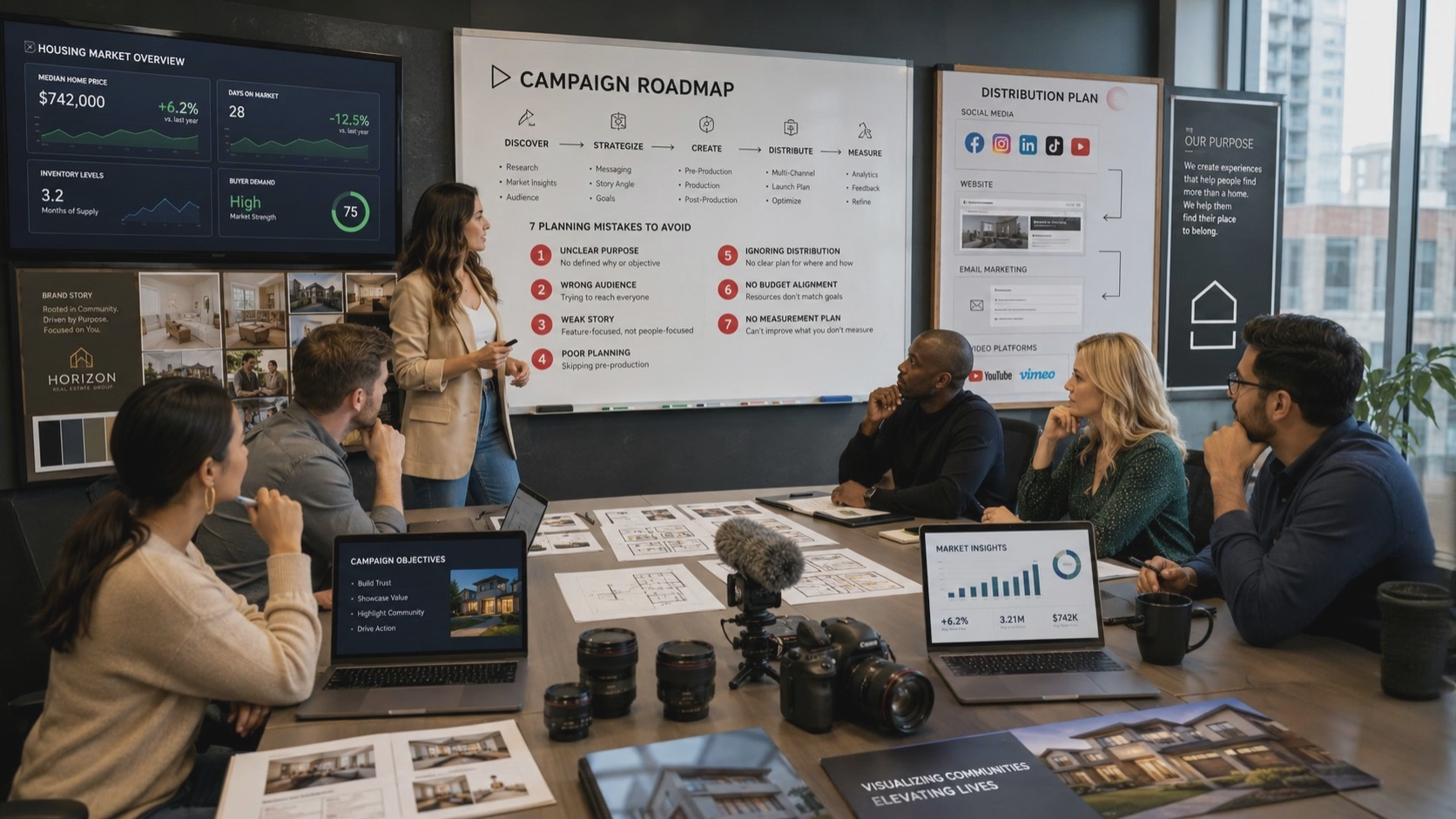
1. You start with the camera instead of the goal
This is the mistake that creates all the other ones. A team gets excited, books a shoot, and figures out the message later. The result is a nice looking video that nobody can quite explain the purpose of.
Before anyone picks up a camera, you should be able to answer three questions in one sentence each.
- What is this video supposed to do?
- Who is it for?
- Where will people watch it?
A recruitment video for LinkedIn and a product explainer for a sales deck are not the same project, and they should not be shot the same way.
When you lead with the goal, every decision after it gets easier, from the script to the run time to the music. To see how a purpose-driven production process comes together, learn more about corporate video production. Skip that step and you are just hoping the footage adds up to something.
2. You try to say everything in one video
When a video is expensive to make, the temptation is to cram every message into it. The team wants to cover the company history, the product line, the values, the client roster, and the new office, all in ninety seconds. What you get is a video that says a lot and communicates nothing.
Good corporate video respects one idea at a time. A team spotlight is about the people. An explainer is about how the thing works. A case study is about the outcome a client got.
Asking one video to do all of those jobs waters down each one. If you have five messages, you probably have five videos, and that is a better problem to have. A focused ninety second video beats a scattered five minute one every time.
3. You film it and forget it
Plenty of companies spend real money on production and almost nothing on getting the video seen. The file lands in a shared drive, goes up on the homepage, maybe earns one LinkedIn post, and that is the whole plan. That is like printing a great billboard and leaving it in the garage.
Distribution is not an afterthought. It is half the value.
A single video can be:
- Cut into shorter clips for social.
- Embedded on a landing page.
- Added to a sales sequence.
- Dropped into an email nurture.
- Pinned to the top of a profile.
One shoot with a founder can become a homepage hero video, three or four social cuts, a snippet for the email signature, and a clip your sales team drops into follow up. Same footage, five jobs.
The brands that win with video treat every shoot as a content supply, not a single deliverable. Before you approve a budget, ask where the video is going to live and how many times you can put it to work.
4. You sound like a brochure
The fastest way to lose a viewer is to sound like a corporate brochure read out loud. Stiff scripts, buzzwords, and people reciting lines they clearly would never say in real life all send the same signal, which is that this content is for the company, not the customer.
The videos that connect feel human.
- Let employees speak in their own words.
- Keep the founder’s message honest instead of polished to death.
- When a client tells their story, let them tell it their way instead of feeding them a script.
Think about the difference between a testimonial where the client reads a script off camera and one where they just talk about the results they got. The second one is messier and far more convincing.
A little imperfection reads as real, and real is what builds trust. If your video could have been made by any company in your industry, it is not doing its job.
5. You waste the first few seconds
Attention to video is gone in a blink. If the first three to five seconds do not give people a reason to keep watching, most of them will not. Yet so many corporate videos open with a slow logo animation, a sweeping drone shot, and thirty seconds of throat clearing before anything actually happens.
Lead with the hook.
Open on:
- The problem you solve.
- A surprising number.
- A bold statement.
- A face talking straight to the viewer.
Save the logo for later, or work it in without stopping the momentum.
A simple test helps here. Watch your own video on mute for the first five seconds. If you cannot tell what it is about or why you should care, the opening needs work, because most people are scrolling without sound anyway.
This matters even more on social, where the platform will show your video to more people only if they keep watching. The opening is not the warm up. It is the whole ballgame.
6. You forget to tell people what to do next
A video can be beautiful, on message, and widely watched, and still fail because it never asks for anything. The viewer finishes, nods, and moves on, because you never told them where to go.
Every video should end with one clear next step.
- Book a call.
- Visit the page.
- Download the guide.
- Reply to the email.
One action, stated plainly. Two or three competing asks will get you none of them.
Decide what you want the viewer to do the moment the video ends, then make that the last thing they hear and see. It is the simplest fix on this list and the one teams skip most often.
7. You treat video as a one-off instead of a system
The biggest mistake is thinking about video one project at a time. A company needs a recruitment video, so they make one. Six months later they need something for a trade show, so they start from scratch. There is no throughline, no consistency, and no compounding return.
Video pays off when it works like a system.
- A style guide keeps the look and tone consistent across every piece, so your content feels like it comes from one brand instead of five different vendors.
- A content plan keeps you shooting on a rhythm instead of scrambling for one off requests.
When video is built as an engine rather than a series of favors, it stops being a cost and starts being an asset that grows with you.
Get the strategy right and the footage earns its keep
None of these mistakes come from a lack of talent. They come from treating video as a creative errand instead of a business tool. Get the strategy right, respect the viewer’s attention, and give every video a job and a place to live, and the footage starts to pay you back.
At INDIRAP, we build corporate video around purpose first and production second, because that is what turns a nice video into a result. If you want a second set of eyes on your video strategy, book a free 30 minute Discovery Call and we will help you find the gaps before you spend another dollar on production.
Frequently Asked Questions
How long should a corporate video be?
It depends on the job. Explainers work best around sixty to ninety seconds, internal updates should stay under three minutes, and training videos can run longer as long as they are broken into short segments. When in doubt, cut it shorter.
How do we know if a corporate video actually worked?
Tie the video to the goal you set at the start. Judge a recruitment video by applications, an explainer by conversions or shorter sales cycles, and a training video by completion rates. Views and likes feel good, but they do not pay the bills.
Do we need a new video for every platform?
Not a new shoot, but you do need new cuts. One well planned shoot can produce a long form version for your site and several short clips built for the way people watch on social. Plan for that before you film, not after.