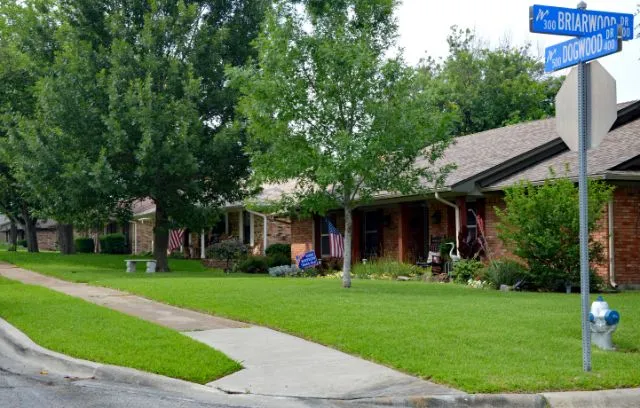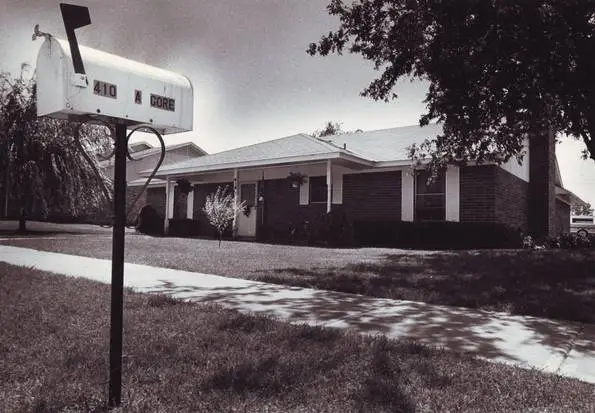

On a hot Friday, June 13, 1980, 410 Dogwood Drive in Wylie, Texas, was the kind of house you drove past without a second glance: a low-slung brick ranch, a neat yard, a quiet street in a town that still felt more rural than suburban.
By the end of that day, the address was on every newscast in North Texas. Inside the utility room, schoolteacher Betty Gore was found dead, struck 41 times with a wood‑splitting ax. Her friend from church, homemaker Candy Montgomery, admitted to swinging the ax but said she did it in self‑defense after a confrontation about an affair with Betty’s husband, Allan.
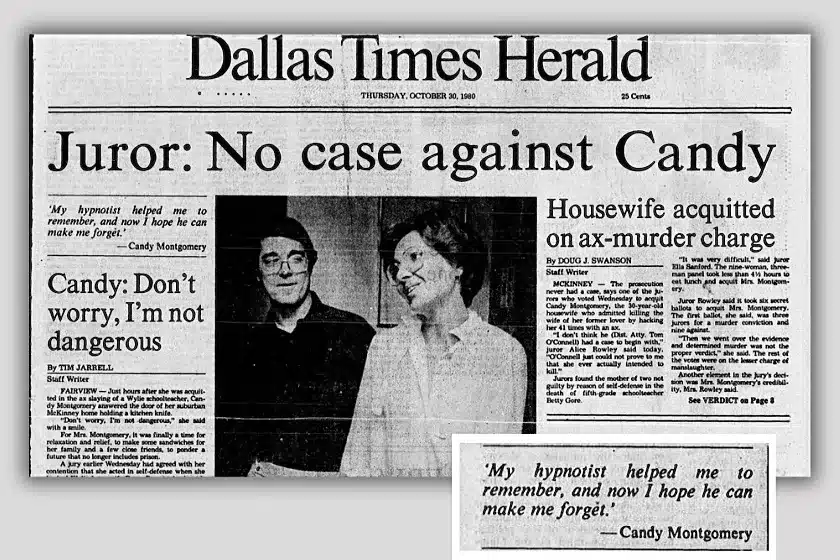
A Collin County jury believed her. On October 30, 1980, Montgomery was acquitted of murder. The eight‑day trial in McKinney was presided over by Judge Tom Ryan. A jury of nine women and three men deliberated just over three hours before returning the not‑guilty verdict.
Viewers binge the shows, search online for the real people, and eventually land on Zillow or Redfin, staring at that same three‑bedroom house on Dogwood Drive, now photographed with cheerful staging and granite counters.
The story has become part crime legend, part real-estate riddle: What does it mean when an ordinary suburban house carries a history like this, and what happens to a neighborhood when the most famous address on the block is famous for all the wrong reasons?
A Friday in a Town That Didn’t Always Lock Its Doors
Source: Pinterest.com
In 1980, Wylie sat on the outer edge of the Dallas-Fort Worth metroplex, a small town between two lakes with a population of only a few thousand people, about 3,150 residents according to historic state figures. By the 2020 census, Wylie had grown into a full suburban city with about 57,500 residents, and regional estimates in the mid-2020s put the population in the low 60,000s and still climbing. Yet in the early ’80s, it was still the kind of place where you recognized faces in the grocery store and waved at passing trucks.
Candy Montgomery and Betty Gore were part of that young, church-centered middle class that was moving into Collin County as Dallas’ growth pushed steadily north. Both couples attended the Methodist church in nearby Lucas: Candy and her husband, Texas Instruments engineer Pat, and Betty and her husband, Rockwell engineer Allan. Their kids played together. They volunteered. For a while, they were just two families plugged into the same web of softball games, potlucks, and Bible study.
What happened next is now true‑crime canon: Candy and Allan began a carefully scheduled affair, meeting at the Como Motel along Central Expressway in Richardson, in the middle of the region’s growing high‑tech corridor.
The area later became known as the “Telecom Corridor,” a term first used in 1988 and trademarked in 1992. The affair ended months before the killing, but it didn’t really end; it just moved inside their marriages, into arguments and silences and things unsaid.
On June 13, 1980, Allan left on a work trip. Candy came to the Gores’ Wylie home late that morning to pick up a swimsuit for the Gores’ older daughter, who was spending the night with the Montgomerys. Sometime after Candy walked through the front door, an argument in the utility room turned into a fight.
By that evening, after being unable to reach Betty, neighbors forced their way into the house and found her body. Neighbors Richard Parker and Lester Gayler were among those who discovered the scene; Betty’s infant daughter, Bethany, was found alive in her crib.
For several days, before anyone publicly named a suspect, Wylie lived with the idea of an unknown ax-wielding killer. Parents kept kids indoors. Doors that had rarely been locked at night suddenly were. Local TV footage from that week shows residents clustered outside the police station, trying to read answers in the sheriff’s face.
Two Women, Two Houses, And a Roadside Motel
The physical map of the case could not be more ordinary, which is part of why it still unsettles people.
There is the Gore house on Dogwood Drive, built in the mid-1970s, a single-level brick ranch of roughly 1,700 square feet with three bedrooms and two baths, the kind of modest home that exists by the thousands in small Texas suburbs and sits only a short drive from Wylie’s historic downtown. The street has matching mailboxes, roofs that line up in neat rows, and an overall look that says “starter home” more than “headline.”
Then there is the motel where Candy and Allan met: the Como Motel on South Central Expressway in Richardson, a low-slung motor court from the mid-20th century whose neon sign once glowed just off U.S. Highway 75 beside the Pappasito’s and Pappadeaux restaurants.
Fans of the case treated the motel as a frozen piece of the story, real estate writers called it cheesy, and preservationists praised its midcentury lines. In 2023, Pappas Restaurants bought the property, which set off a public fight over whether the aging buildings would be demolished or folded into a future restaurant project.
There is also the house Candy and Pat built for themselves in Fairview near McKinney, a contemporary party-friendly design by architect Stephen Chambers that had high ceilings, big windows, and a layout meant for entertaining rather than hiding away.
In photos from that time, the Fairview house looks like a brochure for the late-’70s version of the good life in North Texas, with open rooms, a large garage, and young trees that had just started to fill in around the lot.
These three structures, two houses and a motel, became the stage on which the whole story played out. They also show how quickly physical sites can move on even when a narrative doesn’t.
The Como held on the longest as a visual relic. Even after it closed, the sign stood, and drivers who knew the story couldn’t help glancing over as they passed.
The Fairview house settled into suburbia. The family moved away. Trees grew taller. Other custom homes went up nearby. On a map, it’s just another four-bedroom on a quiet road.
That leaves the one address that has never been able to outrun its history: 410 Dogwood.
The Trial That Refused To Let The Story End
Credit: Fort Worth Star-Telegram Collection via UTA Libraries
Once Candy acknowledged that she had been at the Gore house that morning, investigators focused on her and eventually arrested her. She was released on bond while her lawyers, civil attorney Don Crowder and criminal defense lawyer Robert Udashen, built a strategy that sounded unbelievable to many people until they heard it laid out in court.
At the trial in McKinney in October 1980, the state told jurors a straightforward story: the affair with Allan gave Candy a motive, and the sheer number of blows made the killing far more than self-defense. Prosecutors argued that whatever began the argument in the utility room, 41 strikes with an ax could not be explained as a reasonable reaction to danger when Candy had other options, such as running out the door.
The defense told a stranger story. Candy, they argued, had gone to the house on a mundane errand. Betty confronted her about the affair. At some point, Betty picked up the ax the family kept in the house; in Candy’s account, the two women struggled, Candy got control of the weapon and, triggered by a childhood trauma when Betty told her to “be quiet,” slipped into a dissociative state that led to the flurry of blows. Psychiatrist Fred Fason testified that the “shhh” moment, recounted under hypnosis. Triggered Candy’s dissociative “snap,” a detail widely reported from the testimony.
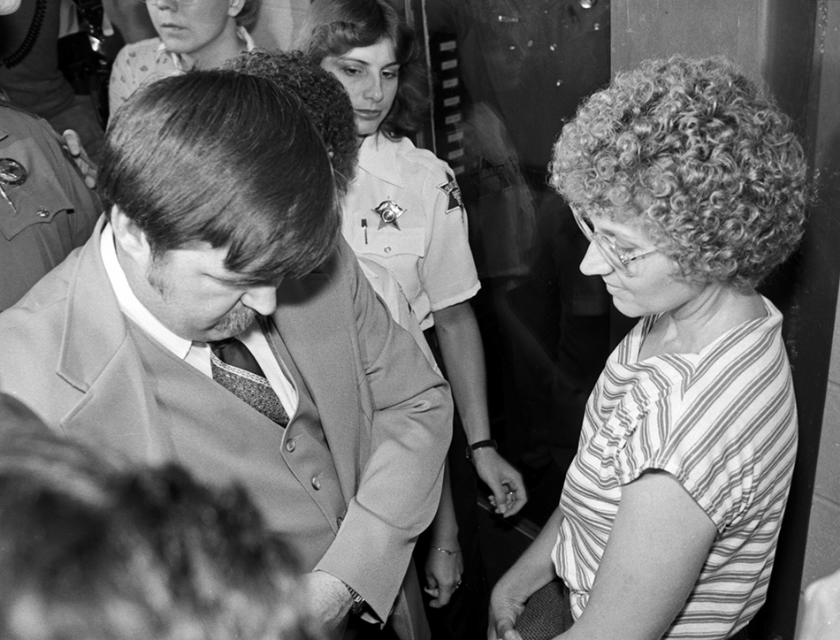
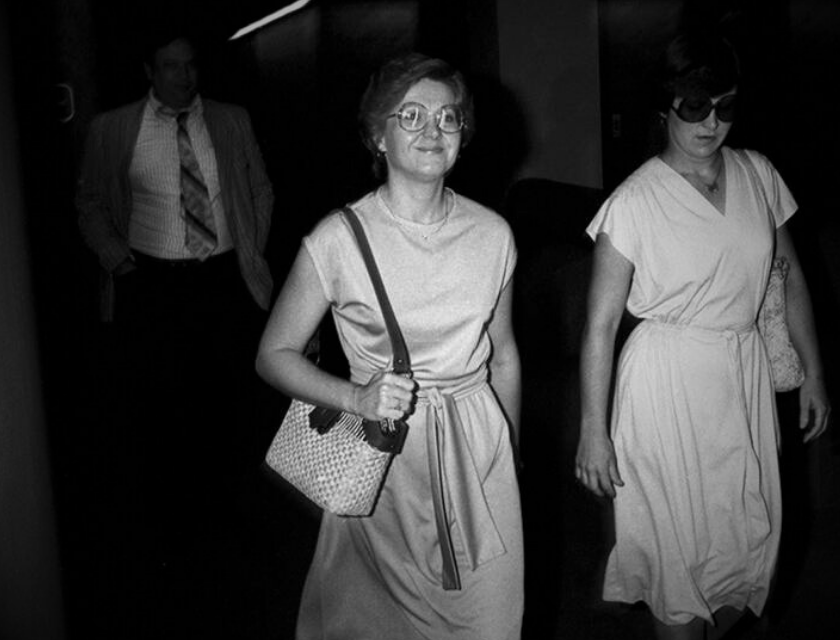
The jury came back with a verdict that stunned many of Candy’s neighbors: not guilty. In interviews since then, some residents have said they accepted the verdict but never quite believed it; others insisted the justice system did what it was supposed to do. Outside the courthouse that day, reporters recorded people shouting “Murderer!” as Candy walked down the steps.
Credit: Fort Worth Star-Telegram Collection via UTA Libraries
In a strictly legal sense, that was the end. She could not be tried again. So the cameras left town, the file went to storage, and the story became something people argued about in living rooms and online instead of in court.
Life After The Headlines: A House That Keeps Selling
If you look at 410 Dogwood strictly as a piece of property, the numbers on it are surprisingly normal. Public records show that the house has changed hands multiple times and that a sale in August 2020 and another in March 2022 both closed quickly at prices that matched other three-bedroom homes in that part of Wylie.
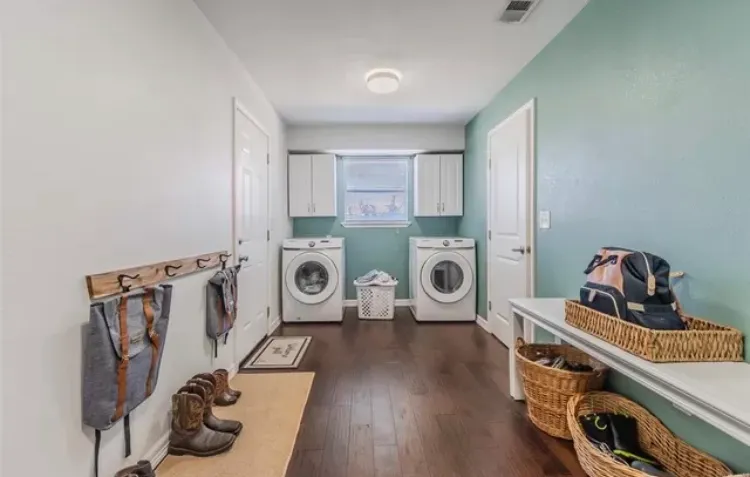
Credit: MLS (2022) The utility room at 410 Dogwood, where Betty Gore was found dead on June 13, 1980
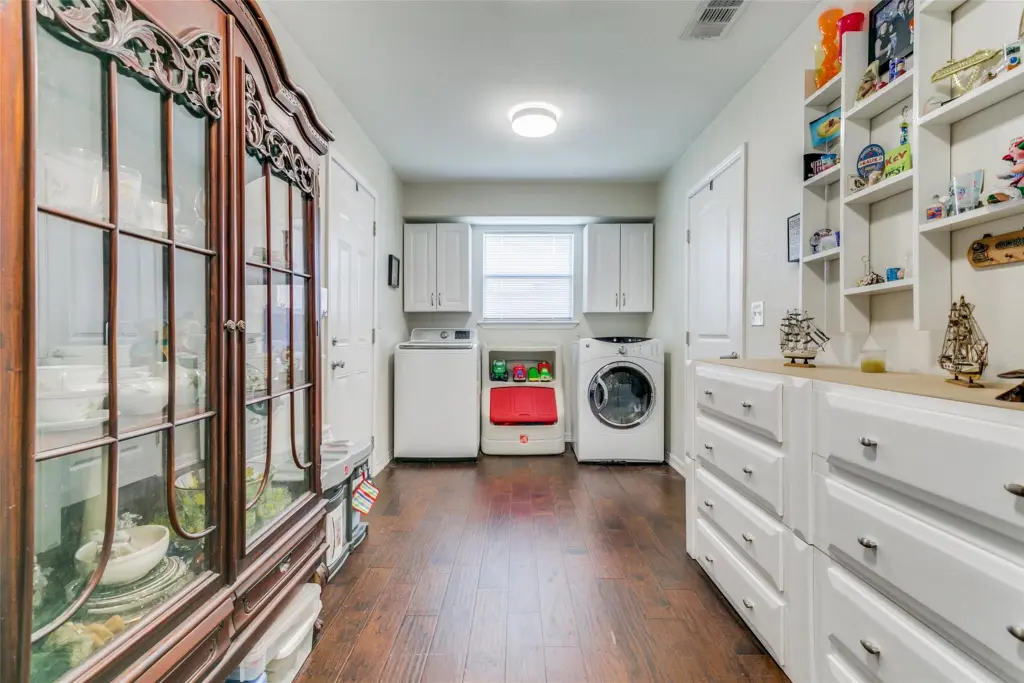
Credit: MLS (2020) The utility room when it was on the market in 2020
There is no hint in the marketing copy of the police tape that once crisscrossed the laundry room. In Texas, sellers aren’t required to disclose deaths from natural causes or suicide, and the statute likewise does not impose an express duty to disclose a past homicide. But a high-profile murder is treated as information most buyers would reasonably want to know, and agents say it is typically discussed off the page.
Texas Property Code §5.008(c) exempts natural, suicide, and accidents unrelated to the property’s condition; while homicide isn’t listed, brokers must avoid misrepresentation and many discuss notorious events off-MLS or when asked.
Real estate agents use the phrase “stigmatized property” for homes like this, where the building itself is fine yet a past event gives the address a shadow in people’s minds that is much harder to measure than a crack in the foundation. Research on crime and housing prices suggests that nearby homicides or other violent events can cause a short-term hit to sale prices of a few percent and can keep homes on the market longer. Experts such as appraiser Randall Bell have reported discounts in the 10 to 25 percent range in the most notorious cases, even though some homes eventually reset to full value.
Those discounts do not last forever, and over time buyers focus more on square footage, schools, and commute times. In a fast-growing suburb with limited inventory, you may end up buying the former Gore house because you like the vaulted ceiling or you need to be near work, and only later does a neighbor mention what happened in the utility room back in 1980. In that sense, 410 Dogwood fits into the same mental category as other homes with baggage, the way people weigh the pros and cons of a foreclosure that needs work or a rental house that already has tenants. Every buyer has to decide for themselves whether the story attached to the place matters more than the price, the layout, or the chance to own a home in a competitive market.
The Woman At The Center, Offstage
On paper, Candy Montgomery’s legal story stops in 1980 with the charge of murder and the not guilty verdict based on her claim of self-defense. Her life after that did not freeze, although she has done almost everything possible to keep it out of public view.
After the trial, Candy and Pat left Texas for Georgia. Reports say they divorced a few years later; Candy went back to using her maiden name, Candace Wheeler, and she slowly built a second career as a mental health counselor or family therapist. People who have tried to track her down say she lives quietly in Georgia in her 70s, has no public social media, and reportedly turned down requests to participate in the recent television dramatizations of the case.
In that sense, she has what the Wylie house never really gets: the option to slip into anonymity. A person can change a last name and move across the country. A house keeps its address.
The Unsettling Legacy of an Ordinary House
What makes the Candy Montgomery story so sticky is that nothing about the built environment signals drama. There is no Gothic mansion on a cliff, no looming high-rise. There is no spooky mansion on a hill and no looming high-rise, only a tract house in a commuter town, a fading roadside motel by the freeway, and an architect’s idea of a fun family home in the exurbs.
We tend to look at neighborhoods like that and see a familiar script about upward mobility, school events, paychecks, and safe predictability, which is exactly why the house on Dogwood Drive feels so out of step with the story that most people want that street to tell. The house undercuts the idea that terrible things only happen in places that look creepy, and it reminds us that many of the worst moments in American life take place in kitchens, laundry rooms, and family rooms that were built to feel ordinary and safe.
Over time, those rooms get new paint and furniture, new owners move in, the photos on the fridge change, the listing in the MLS gets updated, and the block goes back to mowing lawns and putting out holiday decorations. The history does not disappear, yet it stops being the only thing that defines the house. Instead, it becomes one more layer that lives alongside all the other stories people carry with them when they decide to call a place home.
The Town That Locked Its Doors
Before Candy Montgomery was named a suspect, Wylie residents believed an ax murderer was on the loose, a fear captured in local media like the KXAS news clip from June 16, 1980.
In a scene that now feels like a snapshot of a bygone era, archival footage shows kids on bikes riding up to the Wylie Police Department to see what was happening. Residents in this comfortable Collin County suburb, then considered “the country,” suddenly began locking doors that had rarely been used before.
They Throw Candy in Jail Again
Credit: Fort Worth Star-Telegram Collection via UTA Libraries
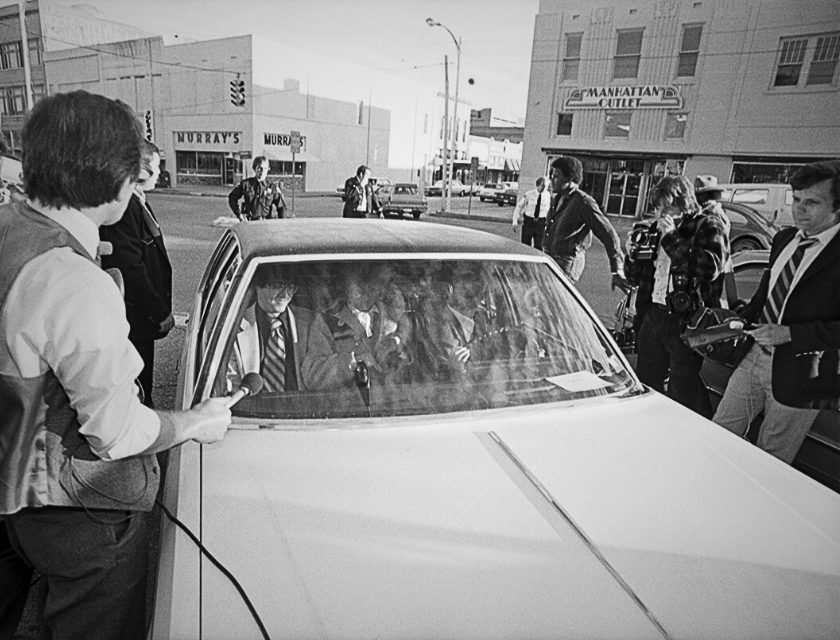
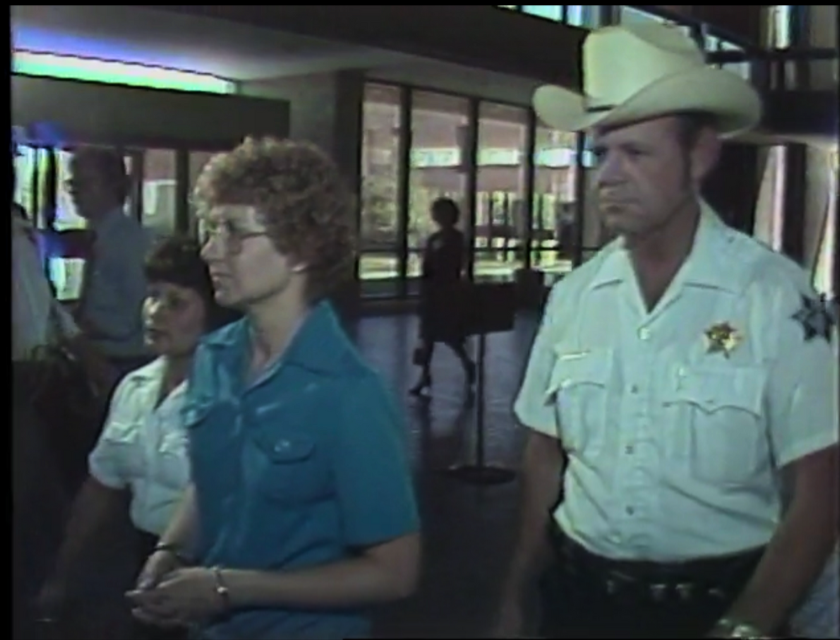
When Candy arrived at the Collin County Sheriff’s Office to surrender, she was charged with murder and held on $100,000 bond. Her attorney, Robert Udashen, later described a hostile process, telling the Lakewood Advocate that he felt the defense team was ambushed from the start:
Once they got a warrant for Candy, I negotiated an agreement with the district attorneys, and I drove her up to McKinney. I was gonna take her to the sheriff’s office and they weren’t supposed to notify the press… But there’s all these people. They completely violated their agreement.
I made arrangements to have a bondsman post the bond before I ever drove Candy up there. The sheriff wouldn’t take the bond and let her out. Then we had a hearing on that, and we finally got her out.
After we get her out, two days later, Judge Ryan orchestrates this hearing, which was supposed to be about a gag order. I took Candy up there and the judge does impose a gag order, but then he launches into a hearing on whether Candy’s bond was sufficient. It was clear that the judge, district attorney, and sheriff are all prepared for this hearing. No one bothered to tell me about it. Then they throw Candy in jail again.
Credit: University of North Texas Libraries, UNT Libraries Special Collections
The People Behind the Candy Montgomery Case
The Candy Montgomery case wasn’t just about one crime, it was about a whole circle of people caught in its aftermath. A young mother lost her life. A family was torn apart. Friends, lawyers, pastors, and detectives found themselves pulled into a story that no one in small-town Wylie, Texas, could have imagined.
To really see the case in full, you have to look at the people behind it. Each of them, whether in the courtroom, at the crime scene, or at home picking up the pieces, played a part in how this tragedy was understood.
Here’s who they were, and why their stories still matter.
1. Betty Gore
Betty Gore was the victim in the case. She was married to Allan Gore and was found dead in her home.
June 13, 1980, Wylie, Texas: Betty Gore, 30, a schoolteacher and mother of two, was found dead in the utility room of her home. The shock never really left the block—and, years later, the story kept returning to the spotlight. To see it clearly, keep the focus on the people: Betty and her family, Allan Gore, and Candy Montgomery, plus the friends, pastors, detectives, and lawyers pulled into the undertow.
That morning, Betty missed her child’s swim class. Friends went to check on her. An infant slept in the house. The scene sat inside a cramped utility room—washer, dryer, freezer, kids’ things—and the ax was recovered there.
Candy, Betty’s friend from church, had ended an affair with Allan months earlier. A confrontation followed. A fight. Candy admitted she killed Betty—41 blows—and said she did it in self‑defense. A jury accepted the claim and acquitted her. The verdict split Wylie and lit debates about self‑defense, gender, and what “reasonable” looks like when domestic conflicts turn violent. Candy was a likable, churchgoing suburban mom—and yet she walked out of court free.
The damage at home was permanent. Two daughters grew up without their mother. Neighbors kept locking their doors. The case exposed the quiet pressures of suburbia—marriages under strain, friendships crossing lines, the cost of betrayal.
Streaming brought the tale back into the conversation: Hulu’s Candy (Jessica Biel) in 2022, then HBO Max’s Love & Death (Elizabeth Olsen) in 2023. And still, Betty is too often reduced to a headline. Remember her as she was before the violence: a teacher, a wife, a mother—human, specific, and gone.