- What Kind of Wood Is Best for Wall Shelves?
- What Is the Best Wood for Shelves That Won’t Sag?
- Is It Cheaper to Build or Buy Shelves?
- Tips for Installing Wood Shelves on a Wall
- Frequently Asked Questions
- Q: Can I use pine for heavy wall shelves?
- Q: How much weight can a wood wall shelf hold?
- Q: How deep are wall shelves?
- Q: Do floating shelves hold as much as bracket shelves?
- Q: How can I stop wooden wall shelves from wobbling?
- Q: Can wooden wall shelves be used in a bathroom?
- Q: How far apart should wall shelves be spaced?
There are many home fixtures that look simple but require some thought before you buy. The wrong wood, support, or wall anchor can turn a nice shelf into a sagging mess in a matter of months.
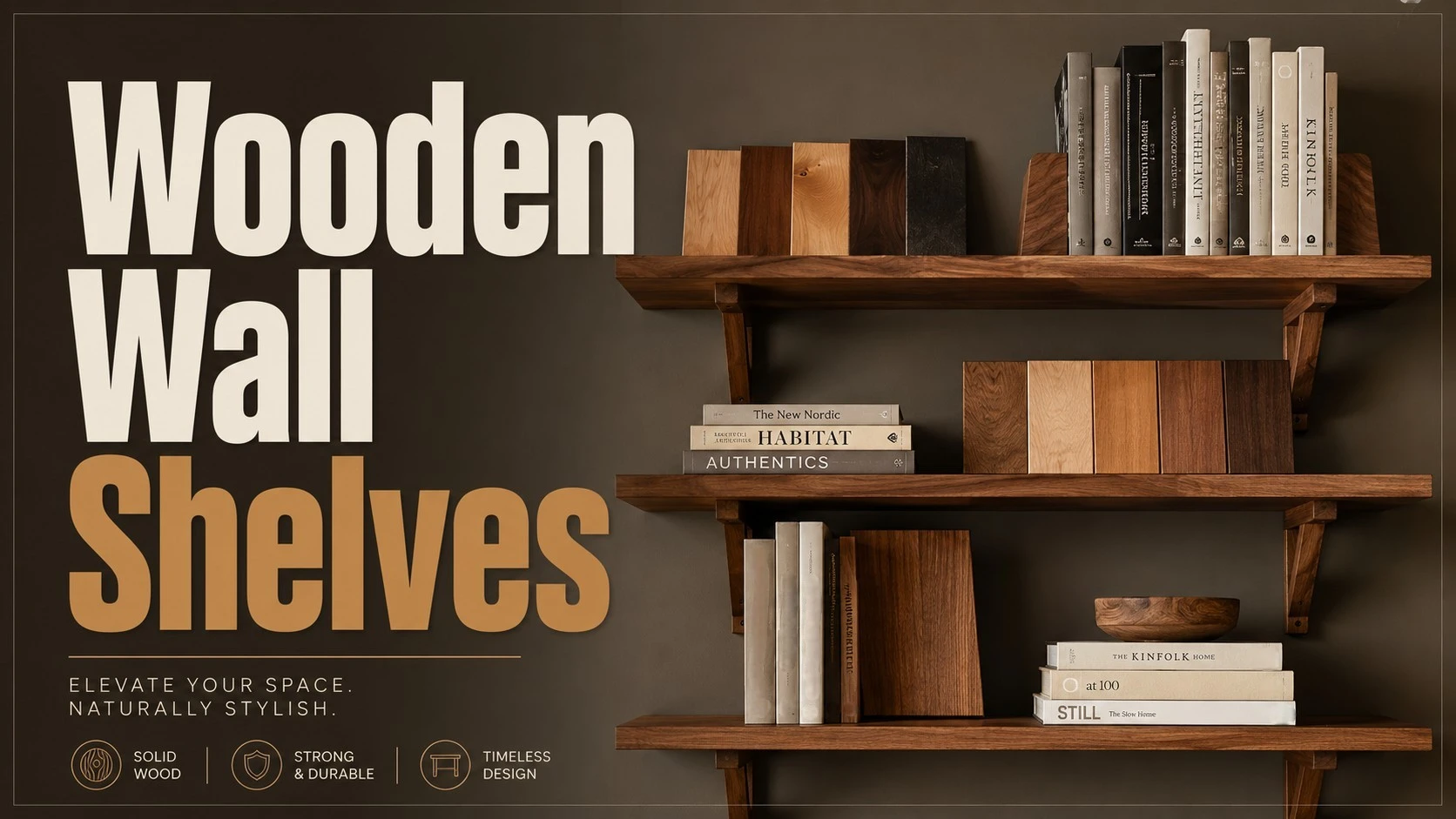
This guide takes you through everything you need to know, from wood varieties to pricing, so you can make the right choice for your space.
What Kind of Wood Is Best for Wall Shelves?
The best wood for wall shelves depends on three things: how much weight the shelf needs to hold, your budget, and what look you want for your home.
- Oak is a popular choice. It is very durable , readily available , stains well , and can support heavy loads such as books or dishware . Red oak in particular is a solid choice for most people .
- Maple is slightly harder than oak and holds up great in high-traffic areas like kitchens. It has a smoother grain, making it a great choice if you intend to paint the shelf.
- Pine is an affordable option. It is a softer wood, so it can get dents and scratches more easily, but it works well for lighter items such as framed photos, small plants or decorations. Many people like the rustic look of pine, especially in living rooms and bedrooms.
- Walnut is a premium option. It has a rich, dark color that complements mid-century modern and contemporary spaces perfectly, but it costs significantly more than oak or pine.
- Birch plywood deserves a mention, too. It isn’t solid wood, yet it delivers surprising strength and resists warping better than many softwoods. For long shelves where sagging is a concern, ¾-inch birch plywood is a smart, budget-friendly choice.
Note
Avoid MDF for wall shelves that need to hold heavy objects. MDF looks smooth when painted, but it absorbs moisture easily, sags under heavy weight, and does not hold screws well near the edges. It works for very light decor, but fails for anything heavier.
What Is the Best Wood for Shelves That Won’t Sag?
The most common complaint people have with wooden wall shelves is that they sag, and it usually comes down to two things: using the wrong type of wood or trying to span too wide a space without adding any support.
Hard maple and red oak rank among the stiffest and most easily found wood types, and they are the best choice if sag concerns you. Their natural strength means they resist bowing under pressure far better than softer woods.
Baltic birch plywood at ¾ inch thickness provides another strong option for wider shelves. Thanks to its cross-banded layers, it resists sagging across long spans more effectively than solid softwoods of equivalent thickness.
A good rule of thumb is to limit the span for shelves carrying significant weight to under 30 inches without middle support. No matter the type of wood, every additional foot beyond that increases the likelihood of sagging.
Shelf thickness is important, too. ¾ inch for weight-bearing shelves and 1 inch for spans over 36 inches. Pine shelves are okay for small loads, but if you want to store heavy books, electronics, or anything else that weighs more than 20 to 25 pounds, it’s always best to upgrade to a strong hardwood or birch plywood.
Is It Cheaper to Build or Buy Shelves?
In most cases, building your own wooden wall shelves is significantly cheaper than buying pre-made options of similar quality.
A 36-inch solid pine shelf made from raw lumber generally costs $15 to $30 in materials. The same length in red oak could run $35 to $60. Compare that to store-bought solid wood shelves, which frequently start at $60 to $80 for plain designs and go well over $150 for anything with a high-end finish or included floating hardware.
The catch is factoring in your tools and effort. If you already own a saw, drill, and sander, making your own shelves makes sense. If you have to buy or rent equipment, the savings aren’t that great. For just one shelf, buying ready-made is usually simpler and only slightly more expensive.
Another factor is the quality of materials. Plenty of bargain store shelves, even those advertised as “real wood,” rely on MDF cores, thin veneers, or hollow cores. When you build your own, you control the materials. A handmade pine shelf stays true to solid pine, while a $40 store shelf might be mostly particleboard.
The bottom line
Building costs less and often offers better quality if you have the tools and time.
Tips for Installing Wood Shelves on a Wall
If not properly attached, even the best shelf can fall. Here are a few things to keep in mind before you start drilling:
- Find the studs: Whenever possible, fasten into wall studs instead of just drywall. Studs are usually spaced 16 or 24 inches apart. A stud finder speeds this up. If you don’t have one, knocking on the wall and listening for a solid sound instead of a hollow echo can work in a pinch.
- Use the right anchors: If your shelf doesn’t line up with the studs, use toggle bolts or heavy-duty hollow-wall anchors rated for the weight you plan to store. For anything beyond the lightest decorative shelves, ordinary plastic drywall plugs will fail.
- Level carefully: A shelf that sits even slightly crooked will look off and can cause round objects to roll off. Take extra time with a level before drilling your pilot holes. It saves headaches down the road.
- Match brackets to the load: For floating wooden wall shelves, concealed hardware works well for lighter items and gives you a clean look. For heavy shelves, exposed L-brackets anchored into studs offer greater reliability and much more support.
Frequently Asked Questions
Q: Can I use pine for heavy wall shelves?
Pine works better for small, light decor. Oak or maple will hold up much better if you plan on storing heavy items.
Q: How much weight can a wood wall shelf hold?
A 3/4-inch oak shelf supported by brackets screwed into wall studs will typically hold between 50 and 80 pounds across a 2-foot span.
Q: How deep are wall shelves?
Wall shelves are generally 8-12” deep. Bookshelves usually need 10-12” of depth and decorative shelves only need 6-8”.
Q: Do floating shelves hold as much as bracket shelves?
Not usually. Good quality floating hardware will support standard weights but for heavy duty shelving the safest way to go is to use L-brackets that are screwed directly into studs.
Q: How can I stop wooden wall shelves from wobbling?
The most common reason for wobbling is anchors that have missed the studs or hardware that has come loose over time. Make sure all screws are tight and at least some anchors are drilled securely into solid studs.
Q: Can wooden wall shelves be used in a bathroom?
Yes, but you need to seal them properly. Teak is naturally water-resistant, but oak and pine need a good waterproof finish, or else they will warp in damp settings.
Q: How far apart should wall shelves be spaced?
Books normally need a 10 to 12-inch gap between shelves. With bigger items , more space is required . 12 to 15 inches is ideal for display or storage , so you have enough room to store taller objects .