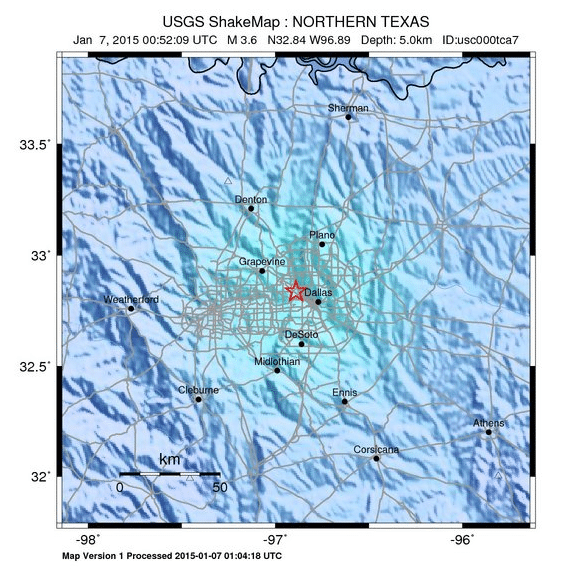
With the ongoing earthquakes in North Texas, and recent identification by seismologists of the two-mile fault line near the Trinity River at the center of the activity, many homeowners are wondering about the safety of their houses.
The biggest January quakes were measured around 3.6 or 3.7, which is relatively minor, but with this ancient subsurface fault reactivated from Irving to West Dallas, nobody can say whether that’s the biggest we’ll see in North Texas.
So I got in touch with two area experts and asked what Dallas-Fort Worth homeowners need to know about how their homes are built, and how much quaking a North Texas house can handle.
Alex Childress is the residential division manager of Childress Engineering Services, a Richardson-based engineering company. He says homes in different parts of the country are built according to varying building codes based on risk of tornadoes/wind and earthquakes.
“Primarily, what we have been addressing that most homeowners are not even aware of is that [their homes] are already engineered for much greater distress than what a 3.5 can do,” Childress said. “In Dallas-Fort Worth, we’ve already designed foundations to withstand 90 mile-per-hour winds, which far exceed the requirements of what they would withstand from these earthquakes.”
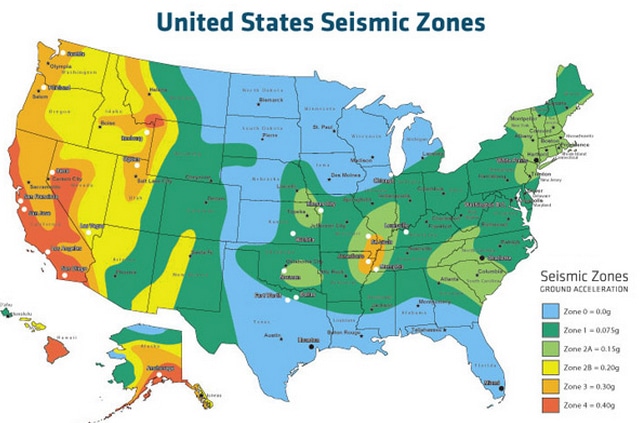
Which brings us to building codes and seismic zones. Seismic zone maps were introduced in 1949. They were intended to represent the likely levels of earthquakes and, therefore, the potential for building damage. Nowadays, engineers use more sophisticated methods and the large zones seen in the picture above have been replaced by detailed contour maps. These provide a more refined representation of potential seismic ground shaking in a given location with a certain period of time.
But because they make the risk easy to understand, seismic maps are still generally useful for our purposes. Taking a look at the map above, and you can see much of DFW is in the lowest risk zone, a zero, just bordering on the next risk zone, a one. With increased seismic activity in North Texas, the question becomes, should that risk be revised? And should building codes follow suit?
“The homes in this area designed to handled wind load and seismic load for Texas, not California,” said James Fontaine, president of SlabTek, a Richardson-based company that creates patented products for foundation systems to protect homes from damage. “With some of the new finings, we wonder, does that zone one [seen just north of DFW] extend here or become zone two? These zones determine our building codes and requirements.”
At a February City Hall press conference, Dallas Mayor Mike Rawlings brought up the possibility that the city would reevaluate building codes in light of the earthquakes.
But that’s all in the future and will largely affect new construction. What North Texas homeowners seem to want to know is, “Is my house safe now?”
The answer for now is basically yes.
“We are meeting or exceeding the residential codes to withstand these tremors or shakes we’ve had,” said Childress. “If you’ve got something can withstand what the zone requirement is here in Texas, you should be okay.”
Fontaine agreed, saying, “All the homes [in DFW] are deigned to withstand zone zero or one levels.”
The rattling caused by these North Texas earthquakes can cause cracks in walls, things to fall off shelves, and maybe a broken window. As for the future, it’s wait and see.
“What I’ve read is that there have been 120 earthquakes since 2008 and 40 in the last month or so,” said Childress. “I’ve been in Texas for over 20 years and I can’t remember when there’s been this much activity—there’s not a lot more that we can do now. You can only control so much and at some point, nature will have its way.”